 ChipApex | Global Electronic Components Supplier

SEARCH
Search Product
Search Post
— IC芯片 | 连接器 | 传感器 | 被动器件 —
Search productSearch post
— IC芯片 | 连接器 | 传感器 | 被动器件 —
Consult the customer manager about the wholesale price.
consultation hotline:86-132-6715-2157
email:[email protected]
Contact the product manager for consultation. One-stop consultation is available.
Do you want a lower wholesale price? Please send us your inquiry and we will reply immediately.
The MAX6165AESA+T is a precision, micropower, low-dropout voltage reference featuring a 5.000V output with ±2mV initial accuracy and a maximum temperature coefficient of 5ppm/°C. It operates within an input voltage range of 5.2V to 12.6V, drawing a typical quiescent supply current of 100µA that remains virtually independent of the supply voltage. The device can source up to 5mA or sink 2mA of load current while maintaining stability with capacitive loads. Packaged in an 8-pin SO format, it functions reliably across an extended temperature range from -40°C to +85°C.
Verify the specific suffix 'A' indicates the ±2mV initial accuracy grade when ordering. Confirm the '+T' designation corresponds to the tape-and-reel packaging format required for automated assembly processes. Ensure the input supply voltage meets the minimum dropout requirement relative to the 5V output. Check for RoHS compliance status if environmental regulations apply to the manufacturing environment.
Select this component when a stable 5V reference is needed with minimal power consumption. The low dropout characteristic allows operation close to the output voltage, extending battery life. Consider the package size constraints as it utilizes an 8-pin SO footprint. Evaluate thermal management requirements based on the specified power dissipation limits at elevated temperatures.
This part belongs to the MAX6161–MAX6168 family of precision voltage references manufactured by Analog Devices / Maxim Integrated. The series offers various fixed output voltages ranging from 1.25V to 5V. All members share similar architectural features including micropower operation and low-dropout capabilities, differentiated primarily by their nominal output voltage and specific accuracy grades.
Direct functional substitutes within the same family include other MAX616x variants with different output voltages if system requirements change. Verify pin compatibility and electrical specifications before substituting with generic voltage references from other manufacturers.
No, the devices are internally compensated and do not require an external compensation capacitor for frequency stability.
The change in supply current is typically 3.2µA/V and has a maximum variation of 8.0µA/V over the operating input voltage range.
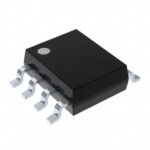 MAX6165AESA+T

The activity of extra discounts on wholesale prices is in full swing…
Please fill in your contact information and we will send you the latest wholesale price list.






