 ChipApex | Global Electronic Components Supplier

SEARCH
Search Product
Search Post
— IC芯片 | 连接器 | 传感器 | 被动器件 —
Search productSearch post
— IC芯片 | 连接器 | 传感器 | 被动器件 —
Consult the customer manager about the wholesale price.
consultation hotline:86-132-6715-2157
email:[email protected]
Contact the product manager for consultation. One-stop consultation is available.
Do you want a lower wholesale price? Please send us your inquiry and we will reply immediately.
The MAX6176AASA+ is a high-precision voltage reference providing a fixed +10V output. It features a maximum temperature coefficient of 3ppm/°C and an initial accuracy of ±0.05%. The device accepts input voltages from (VOUT + 2V) up to +40V, draws a typical supply current of 340μA, and can source up to 30mA or sink 2mA of load current. It includes a TEMP pin for die temperature sensing and a TRIM pin for fine voltage adjustment. The component operates over an extended temperature range of -40°C to +125°C.
Verify the specific suffix 'AASA+' against the manufacturer's official ordering guide to confirm package type and RoHS compliance status. Ensure the selected variant matches the required output voltage and accuracy grade for the target application. Cross-reference the datasheet revision date to confirm electrical characteristics align with current production standards.
Select this component when a stable +10V reference is required with minimal temperature drift. The integrated temperature sensor allows for simultaneous thermal monitoring. Verify that the input voltage remains within the specified differential range relative to the output. Consider the quiescent current consumption if battery life is a critical design constraint.
This part belongs to the MAX6173–MAX6177 family of high-precision voltage references. All members share identical pinouts, packaging, and core technologies, differing only in their preset output voltages (+2.5V, +3.3V, +4.096V, +5.0V, and +10V). The MAX6176 specifically provides the highest voltage option in this series.
Other members of the MAX6173–MAX6177 family are pin-compatible but provide different fixed output voltages. Direct substitution requires matching the system's required reference voltage level. No other distinct part numbers are confirmed as direct substitutes in the provided documentation.
No, the device does not require an output bypass capacitor for stability and is stable with capacitive loads up to 100μF.
The TEMP pin provides an output voltage proportional to the die temperature, making the device suitable for temperature-sensing applications.
The output voltage can be fine-tuned by connecting a resistive divider network between the OUT, TRIM, and GND pins.
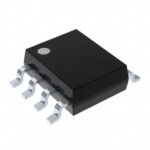 MAX6176AASA+

The activity of extra discounts on wholesale prices is in full swing…
Please fill in your contact information and we will send you the latest wholesale price list.





