 ChipApex | Global Electronic Components Supplier

SEARCH
Search Product
Search Post
— IC芯片 | 连接器 | 传感器 | 被动器件 —
Search productSearch post
— IC芯片 | 连接器 | 传感器 | 被动器件 —
Consult the customer manager about the wholesale price.
consultation hotline:86-132-6715-2157
email:[email protected]
Contact the product manager for consultation. One-stop consultation is available.
Do you want a lower wholesale price? Please send us your inquiry and we will reply immediately.
The MAX6192CESA+T is a precision, micropower, low-dropout voltage reference from the MAX6190–MAX6195/MAX6198 family. It provides a fixed output voltage of 2.5V with an initial accuracy of ±10mV and a maximum temperature coefficient of 25ppm/°C. The device operates within a supply voltage range of 2.7V to 12.6V, drawing a maximum quiescent current of 35µA. It supports source and sink currents up to 500µA with a dropout voltage of approximately 100mV at full load. The component is housed in an 8-pin SO package and functions reliably across a temperature range of -40°C to +85°C.
Verify that the ordering suffix matches the required specifications, as variations exist within the MAX6192 series regarding accuracy grades (A, B, C). Confirm the package type corresponds to the 8-SO footprint. Ensure the lead-free designation aligns with environmental compliance requirements for the target assembly process. Cross-reference the specific part number against the manufacturer's latest documentation to confirm availability status.
Select this component when a fixed 2.5V reference is required with moderate precision and low power consumption. The MAX6192 offers a balance between cost and performance, suitable for systems where battery life is critical but ultra-high precision is not mandatory. Consider the 25ppm/°C temperature coefficient and ±10mV initial accuracy against system tolerance requirements before finalizing the design.
This device belongs to the MAX6190–MAX6195/MAX6198 series of precision voltage references manufactured by Analog Devices / Maxim Integrated. The series shares common architectural features including micropower operation and low-dropout capabilities. The MAX6192 specifically targets applications requiring a 2.5V output, distinguishing it from other members of the family that provide different fixed voltage levels such as 1.25V or 5.0V.
Direct substitutes within the same family include MAX6192AESA+ and MAX6192BESA+, which offer tighter accuracy and lower temperature coefficients respectively. Verify pin compatibility and electrical parameter alignment when considering these alternatives.
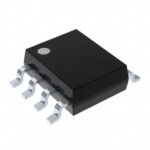 MAX6192CESA+T

The activity of extra discounts on wholesale prices is in full swing…
Please fill in your contact information and we will send you the latest wholesale price list.






