 ChipApex | Global Electronic Components Supplier

SEARCH
Search Product
Search Post
— IC芯片 | 连接器 | 传感器 | 被动器件 —
Search productSearch post
— IC芯片 | 连接器 | 传感器 | 被动器件 —
Consult the customer manager about the wholesale price.
consultation hotline:86-132-6715-2157
email:[email protected]
Contact the product manager for consultation. One-stop consultation is available.
Do you want a lower wholesale price? Please send us your inquiry and we will reply immediately.
The MAX6193CESA+ is a precision, micropower, low-dropout voltage reference manufactured by Analog Devices Inc./Maxim Integrated. It provides a fixed output voltage of 3.000V with an initial accuracy of ±25mV and a maximum temperature coefficient of 10ppm/°C. The device operates within a supply voltage range of 3.2V to 12.6V and draws a maximum quiescent supply current of 35µA. It features a dropout voltage of 200mV at a 500µA load current and supports source and sink currents up to 500µA. The component is housed in an 8-pin SOIC package and functions reliably across a temperature range of -40°C to +85°C.
Verify the specific suffix 'CESA+' against official manufacturer documentation to confirm lead-free/RoHS compliance and exact electrical tolerances. Ensure the input voltage source can provide transient currents during turn-on if operating near minimum dropout conditions. Cross-reference the pin configuration and thermal characteristics with the latest datasheet revision before final integration.
Select this component when a fixed 3V reference is required with low power consumption and moderate precision. It is suitable for battery-powered applications due to its micropower profile and low dropout voltage. Consider the ±25mV initial accuracy and 10ppm/°C temperature coefficient against application requirements. Verify that the 500µA load capability meets the system's sourcing and sinking needs.
This part belongs to the MAX6190–MAX6195/MAX6198 family of precision voltage references. The family shares common architectural features including micropower operation and low-dropout performance. The MAX6193 variant specifically targets the 3.000V output segment, offering a balance between accuracy and power efficiency for general-purpose analog signal conditioning.
Other members of the MAX619x family (e.g., MAX6192CESA+, MAX6194CESA+) share identical pinouts and packaging but differ in output voltage. Direct substitution requires verifying that the alternative voltage level matches the circuit design requirements.
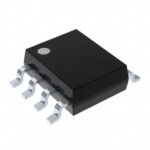 MAX6193CESA+

The activity of extra discounts on wholesale prices is in full swing…
Please fill in your contact information and we will send you the latest wholesale price list.





