 ChipApex | Global Electronic Components Supplier

SEARCH
Search Product
Search Post
— IC芯片 | 连接器 | 传感器 | 被动器件 —
Search productSearch post
— IC芯片 | 连接器 | 传感器 | 被动器件 —
Consult the customer manager about the wholesale price.
consultation hotline:86-132-6715-2157
email:[email protected]
Contact the product manager for consultation. One-stop consultation is available.
Do you want a lower wholesale price? Please send us your inquiry and we will reply immediately.
The MAX6331LUR-T is a precision shunt regulator with an active-high reset output, housed in a 3-pin SOT23-3 package. It regulates the shunt voltage to 5.0V with ±1.5% tolerance and monitors power supply levels against a 4.63V threshold. The device operates over a shunt current range of 100µA to 50mA within a -40°C to +85°C temperature range. It provides a fixed 140ms reset timeout period without external components.
Verify the specific suffix 'L' corresponds to the required 5.0V shunt regulation and 4.63V reset threshold before ordering. Confirm that the active-high RESET polarity matches the target microprocessor interface requirements. Ensure the selected series resistor accommodates the maximum input voltage and load current variations while maintaining the minimum shunt current for stable regulation.
Select this component when board space is limited and both voltage regulation and power-on reset functionality are required simultaneously. The active-high output is suitable for systems requiring non-inverted reset signals. Evaluate the thermal dissipation capabilities if operating at high shunt currents near the 50mA limit, as die temperature affects voltage tolerances.
This part belongs to the MAX6330/MAX6331 family of precision shunt regulators with reset functions. The MAX6331 variant specifically features an active-high reset output, distinguishing it from the MAX6330's active-low counterpart. Both share identical shunt regulation characteristics and package dimensions, allowing for flexible design choices based on logic level requirements.
MAX6330LUR-T: Identical shunt regulator but features an active-low reset output instead of active-high.
The RESET pin provides an active-high push/pull output that remains low while the shunt voltage is below the 4.63V threshold and stays low for 140ms after the voltage rises above the threshold.
The bypass capacitor on the SHUNT pin influences load-transient response; insufficient capacitance may cause oscillation, while excessive capacitance increases recovery time. A minimum of 0.03µF is recommended for stability.
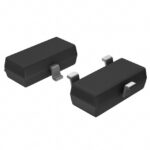 MAX6331LUR-T

The activity of extra discounts on wholesale prices is in full swing…
Please fill in your contact information and we will send you the latest wholesale price list.






