 ChipApex | Global Electronic Components Supplier

SEARCH
Search Product
Search Post
— IC芯片 | 连接器 | 传感器 | 被动器件 —
Search productSearch post
— IC芯片 | 连接器 | 传感器 | 被动器件 —
Consult the customer manager about the wholesale price.
consultation hotline:86-132-6715-2157
email:[email protected]
Contact the product manager for consultation. One-stop consultation is available.
Do you want a lower wholesale price? Please send us your inquiry and we will reply immediately.
The MAX6334UR17D3 is a 3-pin, ultra-low-voltage, low-power microprocessor supervisory circuit manufactured by Analog Devices Inc./Maxim Integrated. It monitors power supplies in 1.8V to 3.3V systems to increase reliability and reduce cost by eliminating external components. The device asserts an active-low reset signal whenever the VCC supply voltage declines below a preset threshold of 1.7V (indicated by suffix D3). It maintains this state for a preset timeout period after VCC rises above the threshold. The output is open-drain, and the circuit is guaranteed to be in the correct state for VCC down to 1.0V.
Verify the specific threshold voltage associated with the 'D3' suffix against the official datasheet before procurement, as suffixes denote different reset thresholds within the MAX6334 family. Confirm availability status directly with authorized distributors or the manufacturer, as lead times and stock levels fluctuate. Ensure the open-drain output configuration aligns with your system's pull-up requirements.
Select the MAX6334UR17D3 when an active-low, open-drain reset output is required for 1.8V to 3.3V systems. Choose this part over push-pull variants if the application necessitates wired-OR connections or compatibility with open-drain inputs. Verify that the 1.7V threshold matches the critical brown-out detection point of the monitored processor.
The MAX6334 belongs to the MAX6332/MAX6333/MAX6334 family of 3-pin uPower reset circuits. While the MAX6332 offers active-high push-pull output and the MAX6333 offers active-low push-pull output, the MAX6334 specifically provides an active-low open-drain output. All three share similar low-power characteristics and transient immunity features.
The primary difference is the output stage. The MAX6333 has an active-low push-pull output, while the MAX6334 has an active-low open-drain output. Both monitor the same voltage ranges and offer similar low-power performance.
No, the standard MAX6334 does not include a manual reset input. It automatically asserts the reset signal based solely on the monitored supply voltage crossing the threshold.
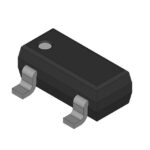 MAX6334UR17D3

The activity of extra discounts on wholesale prices is in full swing…
Please fill in your contact information and we will send you the latest wholesale price list.





