 ChipApex | Global Electronic Components Supplier

SEARCH
Search Product
Search Post
— IC芯片 | 连接器 | 传感器 | 被动器件 —
Search productSearch post
— IC芯片 | 连接器 | 传感器 | 被动器件 —
Consult the customer manager about the wholesale price.
consultation hotline:86-132-6715-2157
email:[email protected]
Contact the product manager for consultation. One-stop consultation is available.
Do you want a lower wholesale price? Please send us your inquiry and we will reply immediately.
The MAX6336US24D1+T is a 4-pin, ultra-low-voltage, low-power microprocessor reset circuit manufactured by Analog Devices Inc. (Maxim Integrated). It features a fixed threshold voltage of 2.4V and an active-low push-pull output. The device provides a reset timeout of 1ms to ensure stable system initialization. It operates within a supply voltage range up to 5.5V and supports a wide industrial temperature range from -40°C to +125°C. Packaged in SOT-143-4, it is designed for battery-powered and portable applications requiring minimal quiescent current.
Verify the exact suffix D1+T against the manufacturer's official datasheet to confirm the 2.4V threshold and 1ms timeout specifications. Confirm RoHS compliance status through the latest component documentation. Check for obsolescence or lifecycle changes as this series may have limited availability. Ensure the SOT-143-4 footprint matches your PCB design requirements before procurement.
Select this component when a fixed 2.4V reset threshold is required for low-voltage systems. The active-low output is suitable for processors expecting a low signal to assert reset. Consider the 1ms timeout duration relative to your system's startup time requirements. The SOT-143-4 package offers a small form factor for space-constrained designs. Verify that the operating temperature range meets your environmental conditions.
This part belongs to the MAX6336 family of ultra-low-voltage reset circuits. The family includes variants with different thresholds and manual reset options. The MAX6336 series is designed for applications where power consumption is critical. It complements other Maxim Integrated supervisor ICs offering similar functionality with varying pin counts and features.
Check for direct replacements within the MAX6336 series with compatible thresholds. Verify pinout compatibility with alternative SOT-143-4 supervisors. Ensure equivalent electrical characteristics such as quiescent current and reset timeout are met by any substitute component.
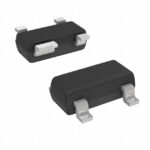 MAX6336US24D1+T

The activity of extra discounts on wholesale prices is in full swing…
Please fill in your contact information and we will send you the latest wholesale price list.





