 ChipApex | Global Electronic Components Supplier

SEARCH
Search Product
Search Post
— IC芯片 | 连接器 | 传感器 | 被动器件 —
Search productSearch post
— IC芯片 | 连接器 | 传感器 | 被动器件 —
Consult the customer manager about the wholesale price.
consultation hotline:86-132-6715-2157
email:[email protected]
Contact the product manager for consultation. One-stop consultation is available.
Do you want a lower wholesale price? Please send us your inquiry and we will reply immediately.
The MAX6337US18D3+T is a microprocessor supervisory circuit designed for low-voltage digital systems. It monitors the VCC supply voltage and asserts an active-low, open-drain reset signal when the input drops below a preset threshold of 1.8V. The device features a manual reset input with debounce capability and operates within a supply voltage range of 1.25V to 5.5V. It draws a typical quiescent current of 3.3µA and includes a fixed timeout period of 150ms after the supply rises above the threshold. The component is housed in a compact SOT-143-4 surface-mount package and supports operation across an extended temperature range from -40°C to +125°C.
Verify the specific suffix D3 corresponds to the 1.8V threshold variant during sourcing. Confirm RoHS compliance status as indicated by the plus sign in the part number. Check manufacturer documentation for lead time variations due to potential limited availability or discontinuation notices associated with older Maxim Integrated product lines.
Select this component when a single-channel voltage monitor with manual reset functionality is required. Ensure the 1.8V threshold aligns with the target system's minimum operating voltage. Consider the open-drain output requirement for pull-up resistor implementation. Verify that the SOT-143-4 package fits the PCB layout constraints compared to alternative packages like SC-70 or TDFN.
This part belongs to the MAX633x series of ultra-low-voltage, low-power microprocessor reset circuits. The series differentiates models primarily by output type (push-pull vs. open-drain), presence of manual reset, and specific voltage thresholds. The MAX6337 specifically combines manual reset capability with an open-drain output, distinguishing it from the push-pull MAX6336 and non-reset MAX6335 variants.
Direct substitutes include other MAX633x family members such as MAX6337US19D3+T or MAX6337US23D3+T if different voltage thresholds are acceptable. Cross-reference with MAX6335US18D3+T if manual reset is not needed. Verify pin compatibility and electrical specifications before substitution.
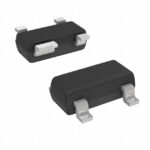 MAX6337US18D3+T

The activity of extra discounts on wholesale prices is in full swing…
Please fill in your contact information and we will send you the latest wholesale price list.





