 ChipApex | Global Electronic Components Supplier

SEARCH
Search Product
Search Post
— IC芯片 | 连接器 | 传感器 | 被动器件 —
Search productSearch post
— IC芯片 | 连接器 | 传感器 | 被动器件 —
Consult the customer manager about the wholesale price.
consultation hotline:86-132-6715-2157
email:[email protected]
Contact the product manager for consultation. One-stop consultation is available.
Do you want a lower wholesale price? Please send us your inquiry and we will reply immediately.
The MAX6338OUB+T is a quad voltage monitor supervisory circuit manufactured by Analog Devices Inc./Maxim Integrated. It monitors up to four power supplies without external components, featuring active low open-drain outputs and a reset timeout of less than 1ms minimum. The device operates within a supply voltage range of 2.5V to 5.5V, with a typical quiescent current of 35µA. Threshold voltages include fixed options such as -4.38V, 2.93V, 4.38V, and adjustable settings. It is housed in a 10-uMAX package and supports an operating temperature range from -40°C to +85°C.
Verify the suffix 'T' indicates tape-and-reel packaging versus tube variants. Confirm RoHS compliance status through official documentation, as some sources indicate non-compliance for specific revisions. Ensure the manufacturer part number matches Analog Devices or Maxim Integrated records. Check availability constraints as distribution may be limited in certain regions. Validate pinout compatibility with target PCB footprint before ordering.
Select this component when simultaneous monitoring of four distinct voltage rails is required. Choose based on specific threshold requirements, noting available fixed values like -4.38V and 2.93V alongside adjustable options. Consider the 10-uMAX package size for space-constrained designs. Verify that the open-drain output configuration aligns with the downstream logic interface requirements.
This part belongs to the MAX6338 series of quad voltage monitors. It shares functional similarities with other members like MAX6338CUB+ and MAX6338BUB+, differing primarily in specific threshold voltage selections and package variations. The series is designed for applications requiring compact, multi-channel power supervision without external components.
Direct substitutes within the same family include MAX6338OUB+ (tube packaging) and potentially MAX6338MUB+ depending on threshold matching. Cross-reference datasheets to ensure threshold voltages and package dimensions are compatible before substitution.
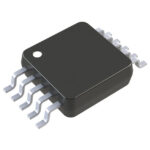 MAX6338OUB+T

The activity of extra discounts on wholesale prices is in full swing…
Please fill in your contact information and we will send you the latest wholesale price list.





