 ChipApex | Global Electronic Components Supplier

SEARCH
Search Product
Search Post
— IC芯片 | 连接器 | 传感器 | 被动器件 —
Search productSearch post
— IC芯片 | 连接器 | 传感器 | 被动器件 —
Consult the customer manager about the wholesale price.
consultation hotline:86-132-6715-2157
email:[email protected]
Contact the product manager for consultation. One-stop consultation is available.
Do you want a lower wholesale price? Please send us your inquiry and we will reply immediately.
The MAX6346XR46+ is a voltage supervisory circuit manufactured by Analog Devices Inc./Maxim Integrated. It operates within a supply voltage range up to 5.5 V and features a fixed threshold voltage of 4.63 V for monitoring a single input. The device provides an active low, push-pull output with a reset delay time of 185 ms. It functions reliably across an operating temperature range from -40°C to +85°C. Key electrical specifications include a power supply current of 500 nA, accuracy of 1.5%, and overvoltage threshold of 4.699 V. The component is housed in a compact SOT-23-3 package suitable for surface mount applications.
Verify the complete part number including suffixes such as '+T' for tape-and-reel packaging when ordering. Confirm RoHS compliance status through official manufacturer documentation or authorized distributors. Ensure the specific threshold voltage variant matches the design requirements, as the MAX6346 series offers multiple fixed voltage options. Cross-reference with the latest datasheet to confirm pinout compatibility and thermal characteristics for the target application environment.
Select this component when a simple, low-cost supervisor with a fixed threshold is required. The 4.63 V threshold suits 5 V logic systems. Consider the 185 ms reset delay for system stability. The SOT-23-3 package minimizes board space. Verify that the 500 nA quiescent current meets battery life requirements. Ensure the operating temperature range covers the intended environmental conditions.
The MAX6346 series belongs to Maxim Integrated's line of micropower voltage supervisors. These devices are designed to monitor power supply voltages and generate reset signals for microprocessors and memory devices. The series includes various threshold voltages and packages to accommodate different design constraints. The MAX6346XR46+ specifically targets applications requiring low power consumption and small form factor.
Check for ADM6346 variants which may offer similar functionality but potentially different thresholds or packages. Verify pin-to-pin compatibility before substitution. Review datasheets for differences in reset delay times and quiescent currents. Ensure replacement parts meet the same temperature and voltage specifications.
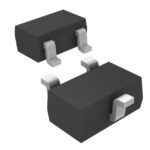 MAX6346XR46+

The activity of extra discounts on wholesale prices is in full swing…
Please fill in your contact information and we will send you the latest wholesale price list.





