 ChipApex | Global Electronic Components Supplier

SEARCH
Search Product
Search Post
— IC芯片 | 连接器 | 传感器 | 被动器件 —
Search productSearch post
— IC芯片 | 连接器 | 传感器 | 被动器件 —
Consult the customer manager about the wholesale price.
consultation hotline:86-132-6715-2157
email:[email protected]
Contact the product manager for consultation. One-stop consultation is available.
Do you want a lower wholesale price? Please send us your inquiry and we will reply immediately.
The MAX6359MSUT+T is a dual-voltage microprocessor supervisory circuit manufactured by Analog Devices Inc. (Maxim Integrated). It operates within a supply voltage range of 1.2V to 5.5V and features two monitored inputs with threshold voltages of 3.08V and 4.63V. The device provides an active-low, push-pull reset output referenced to VCC1, with a reset delay time of 180ms. It includes a manual reset input and a watchdog timer. The component is housed in a SOT-23-6 package, offers 1.5% accuracy, and consumes 20µA of supply current. It functions reliably across an extended temperature range from -40°C to +85°C.
Verify the specific suffix 'MS' against official datasheets to confirm the exact voltage thresholds and temperature grade, as these parameters vary significantly across the MAX6359 family. Confirm RoHS compliance status and lead times directly with authorized distributors or the manufacturer, as availability may be restricted. Ensure the SOT-23-6 footprint matches your PCB design requirements before finalizing procurement.
Select this component when precise monitoring of two distinct voltage rails is required alongside watchdog functionality. The 20µA supply current makes it suitable for battery-operated applications. Verify that the 3.08V and 4.63V thresholds align with your system's power rails. Consider the 180ms reset delay and the active-low push-pull output characteristics for compatibility with your microprocessor reset interface.
The MAX6359 belongs to the Maxim Integrated MAX6351–MAX6360 series of microprocessor supervisors. This family is designed to replace discrete components, offering improved accuracy and reliability. The MAX6359 specifically monitors two voltages and includes a watchdog timer, distinguishing it from variants like the MAX6356 which monitors three voltages without a watchdog.
Check for MAX6359LTUT+T or MAX6359SVUT+T if different voltage thresholds are needed. Verify pinout compatibility with other SOT-23-6 supervisor ICs from the same family before substitution.
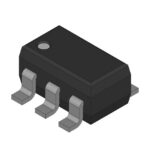 MAX6359MSUT+

The activity of extra discounts on wholesale prices is in full swing…
Please fill in your contact information and we will send you the latest wholesale price list.





