 ChipApex | Global Electronic Components Supplier

SEARCH
Search Product
Search Post
— IC芯片 | 连接器 | 传感器 | 被动器件 —
Search productSearch post
— IC芯片 | 连接器 | 传感器 | 被动器件 —
Consult the customer manager about the wholesale price.
consultation hotline:86-132-6715-2157
email:[email protected]
Contact the product manager for consultation. One-stop consultation is available.
Do you want a lower wholesale price? Please send us your inquiry and we will reply immediately.
The MAX6363LUT26+ is a low-power microprocessor supervisory circuit manufactured by Analog Devices Inc. (Maxim Integrated). It operates within a supply voltage range of 1.2V to 5.5V and features a fixed reset threshold voltage of 2.60V. The device provides an active-low, push-pull output with a typical reset delay time of 280ms. It includes a battery backup switch function for seamless power transition monitoring. The component is designed for single-input voltage supervision without manual reset or watchdog timer capabilities. It operates reliably across a temperature range of -40°C to +85°C and consumes only 15µA of quiescent current.
Verify the specific suffix '26' confirms the 2.60V threshold variant, as this series offers multiple threshold options. Confirm package availability in SOT-23-6 format. Check current distribution status as limited supply conditions may apply. Ensure RoHS compliance documentation matches the '+T' tape-and-reel designation if applicable. Validate that the active-low output polarity aligns with the target system design requirements before finalizing procurement.
Select this component when a fixed 2.60V threshold is required for precise voltage monitoring. Choose this part for designs prioritizing minimal quiescent current draw below 15µA. Opt for this supervisor if battery backup switching functionality is necessary to detect power source changes. Consider this device for space-constrained applications requiring the compact SOT-23-6 footprint. Ensure the application does not require manual reset inputs or watchdog timer features.
This part belongs to the MAX6363L family of low-power microprocessor supervisors. The family is characterized by its ability to monitor single voltage rails with high accuracy. These devices are commonly used in industrial and consumer electronics where power reliability is critical. The Maxim Integrated portfolio emphasizes low-cost, high-reliability solutions for system protection.
No, this specific model does not feature a manual reset input; it relies solely on automatic voltage monitoring.
The battery backup switch allows the device to monitor the transition between the main power supply and a backup battery, ensuring continuous system supervision during power swaps.
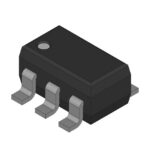 MAX6363LUT26+

The activity of extra discounts on wholesale prices is in full swing…
Please fill in your contact information and we will send you the latest wholesale price list.





