 ChipApex | Global Electronic Components Supplier

SEARCH
Search Product
Search Post
— IC芯片 | 连接器 | 传感器 | 被动器件 —
Search productSearch post
— IC芯片 | 连接器 | 传感器 | 被动器件 —
Consult the customer manager about the wholesale price.
consultation hotline:86-132-6715-2157
email:[email protected]
Contact the product manager for consultation. One-stop consultation is available.
Do you want a lower wholesale price? Please send us your inquiry and we will reply immediately.
The MAX6364PUT46+T is a low-power microprocessor supervisory circuit manufactured by Analog Devices Inc. (Maxim Integrated). It operates within a supply voltage range of 1.2V to 5.5V and features a fixed reset threshold voltage of 4.63V. The device provides an active-low, push-pull reset output with a typical timeout delay of 280ms. It consumes only 15µA of quiescent current and includes a battery backup pin for maintaining system state during power transitions. The component is housed in a compact SOT-23-6 package and supports operation across an industrial temperature range from -40°C to +85°C.
Verify the specific suffix against official datasheets to confirm pinout compatibility and electrical characteristics. Confirm RoHS compliance status and manufacturing origin. Check for obsolescence notices as this series may have limited availability. Ensure the supplier provides traceable documentation matching the exact part number variant.
Select this component when a fixed 4.63V threshold is required for high-voltage rails. The SOT-23-6 package offers space efficiency compared to larger footprints. Consider the 15µA current draw for extended battery life requirements. Verify that the 280ms timeout aligns with the startup sequence timing of the target microprocessor.
This part belongs to the Maxim Integrated MAX636x family of low-power supervisors. These circuits are designed to monitor single-supply voltages and provide reset signals to microprocessors. The family emphasizes low standby current and small form factors for portable applications.
Cross-reference with MAX6364LUT46+T for identical electrical specifications but potential packaging differences. Verify functional equivalence with MAX6363PUT46+T if manual reset inputs are not utilized in the design.
No, the MAX6364PUT46 does not feature a manual reset input; it relies solely on automatic voltage monitoring.
The third pin serves as the Battery Backup (BB) input, allowing the device to maintain its internal state during main power failure.
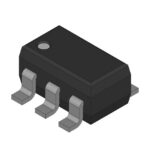 MAX6364PUT46

The activity of extra discounts on wholesale prices is in full swing…
Please fill in your contact information and we will send you the latest wholesale price list.





