 ChipApex | Global Electronic Components Supplier
SEARCH
Search Product
Search Post
— IC芯片 | 连接器 | 传感器 | 被动器件 —
Search productSearch post
— IC芯片 | 连接器 | 传感器 | 被动器件 —
Consult the customer manager about the wholesale price.
consultation hotline:86-132-6715-2157
email:[email protected]
Contact the product manager for consultation. One-stop consultation is available.
Do you want a lower wholesale price? Please send us your inquiry and we will reply immediately.
The MAX6368LKA26-T is a low-power microprocessor supervisory circuit manufactured by Analog Devices Inc. (Maxim Integrated). It operates within a supply voltage range of 1.2V to 5.5V and features an adjustable overvoltage threshold. The device provides a reset output with a fixed delay time of 280ms and includes battery backup functionality for maintaining state during power transitions. It supports chip-enable gating to minimize current consumption in standby modes, drawing only 15µA during operation. The component is housed in an SOT-23-8 surface-mount package and is rated for industrial temperatures from -40°C to +85°C.
Verify the exact suffix configuration against official datasheets, as variations exist between tape-and-reel and cut-tape packaging formats. Confirm availability status directly with authorized distributors, as this specific part number may be subject to limited stock or end-of-life restrictions. Ensure compatibility with existing PCB footprints for the SOT-23-8 package before finalizing procurement orders.
Select this component when low quiescent current and battery backup are primary design constraints. The adjustable overvoltage threshold allows customization for specific rail monitoring needs without changing parts. Verify that the 280ms reset delay aligns with system startup timing requirements. Consider the SOT-23-8 footprint constraints if space is limited in the target application board.
This part belongs to the MAX6368L series of uP supervisors, designed for low-power applications. It shares functional similarities with the MAX6365 and MAX6367 families but offers distinct threshold and feature combinations. The 'L' designation typically indicates low-power variants within the Maxim portfolio, optimized for battery-operated systems where minimal standby current is critical.
Direct substitutes include other MAX6368L variants with compatible pinouts and similar electrical characteristics. Cross-reference specific threshold voltages and package types when evaluating alternatives. Ensure any replacement maintains the same battery backup and chip-enable functionalities to preserve system behavior.
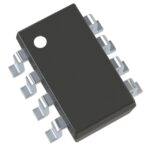 MAX6368LKA26-T
The activity of extra discounts on wholesale prices is in full swing…
Please fill in your contact information and we will send you the latest wholesale price list.





