 ChipApex | Global Electronic Components Supplier

SEARCH
Search Product
Search Post
— IC芯片 | 连接器 | 传感器 | 被动器件 —
Search productSearch post
— IC芯片 | 连接器 | 传感器 | 被动器件 —
Consult the customer manager about the wholesale price.
consultation hotline:86-132-6715-2157
email:[email protected]
Contact the product manager for consultation. One-stop consultation is available.
Do you want a lower wholesale price? Please send us your inquiry and we will reply immediately.
The MAX6429FJUR+T is a low-power, single-level battery monitor with internal hysteresis from the Maxim Integrated family. It operates within a supply voltage range of 1V to 5.5V and consumes only 3.5µA of quiescent current. The device features an active-low push-pull output that asserts when the input voltage drops below a specific threshold (2.944V for this suffix) and deasserts after rising above a higher threshold following a minimum 140ms timeout period. Packaged in a compact SOT-23-3 surface-mount case, it supports operation across an industrial temperature range of -40°C to +125°C.
Verify the exact monitoring threshold voltage associated with the 'F' suffix against the official datasheet, as variations exist within the MAX6427–MAX6438 family. Confirm the package designation matches the required PCB footprint. Ensure compliance with RoHS directives if applicable to your manufacturing standards. Cross-reference the manufacturer part number directly with Analog Devices documentation to avoid confusion with similar supervisory circuits.
Select this component when a simple, low-cost solution is needed to monitor battery health without complex communication interfaces. It is suitable for systems requiring a direct hardware indication of battery depletion rather than digital reporting. Consider the 3.5µA quiescent current impact on total system standby power. Verify that the fixed timeout delay meets the system's startup stability requirements.
This device belongs to the MAX6427–MAX6438 series of single/dual-level battery monitors. These parts are designed specifically for battery-powered applications where power conservation is critical. The family offers various threshold options and packaging choices to accommodate different design constraints while maintaining consistent functional behavior regarding hysteresis and timeout delays.
Check the MAX6427, MAX6428, MAX6430, MAX6431, MAX6432, MAX6433, MAX6434, MAX6435, MAX6436, MAX6437, and MAX6438 families for alternative thresholds or dual-output configurations. Verify pin compatibility and electrical specifications before substitution.
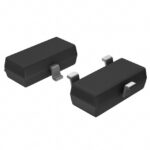 MAX6429FJUR+T

The activity of extra discounts on wholesale prices is in full swing…
Please fill in your contact information and we will send you the latest wholesale price list.





