 ChipApex | Global Electronic Components Supplier

SEARCH
Search Product
Search Post
— IC芯片 | 连接器 | 传感器 | 被动器件 —
Search productSearch post
— IC芯片 | 连接器 | 传感器 | 被动器件 —
Consult the customer manager about the wholesale price.
consultation hotline:86-132-6715-2157
email:[email protected]
Contact the product manager for consultation. One-stop consultation is available.
Do you want a lower wholesale price? Please send us your inquiry and we will reply immediately.
The MAX6429PSUR+T is a low-power, single-level battery monitor with internal hysteresis, manufactured by Analog Devices Inc. under the Maxim Integrated brand. It operates within a supply voltage range of 1.6V to 5.5V and features a typical quiescent current of 1µA. The device provides a low-battery output (LBO) that asserts when the supply voltage drops below a specified threshold and deasserts after rising above a high threshold following a minimum 140ms timeout period. This timeout ensures supply stabilization before enabling power-converter or microprocessor activity. The component is housed in an SOT-23-3 package and is designed for monitoring single lithium-ion cells or multicell alkaline/NiCd/NiMH power supplies.
Verify the specific suffix 'P' against official Maxim Integrated documentation to confirm the exact factory-trimmed threshold voltage level, as this character defines the functional parameter. Ensure the '+T' designation matches the required tape-and-reel packaging configuration for automated assembly processes. Cross-reference the RoHS compliance status with the latest manufacturer release notes to confirm environmental standards.
Select this component when a fixed, factory-trimmed threshold is preferred over user-adjustable options to simplify design and reduce sensitivity to noise. Consider the SOT-23-3 package size for space-constrained applications. Evaluate the 1µA typical current consumption against system standby requirements. Verify that the 140ms timeout aligns with the startup timing requirements of the downstream microprocessor or power converter.
The MAX6429 belongs to the MAX6427–MAX6438 family of single/dual-level battery monitors. Unlike the MAX6433–MAX6438 subfamily which offers user-adjustable thresholds via external resistors, the MAX6429 utilizes factory-trimmed thresholds. This family is fully specified over temperature and is intended for portable electronic devices requiring reliable battery status indication.
The MAX6427 and MAX6428 are part of the same family with similar functionality but different factory-trimmed threshold voltages. Verify that the threshold specifications of these alternatives meet the specific low-battery detection requirements of the target application before substitution.
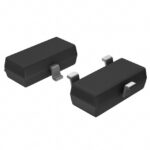 MAX6429PSUR+T

The activity of extra discounts on wholesale prices is in full swing…
Please fill in your contact information and we will send you the latest wholesale price list.




