 ChipApex | Global Electronic Components Supplier

SEARCH
Search Product
Search Post
— IC芯片 | 连接器 | 传感器 | 被动器件 —
Search productSearch post
— IC芯片 | 连接器 | 传感器 | 被动器件 —
Consult the customer manager about the wholesale price.
consultation hotline:86-132-6715-2157
email:[email protected]
Contact the product manager for consultation. One-stop consultation is available.
Do you want a lower wholesale price? Please send us your inquiry and we will reply immediately.
The MAX6430DHUS+T is a low-power battery monitor integrated circuit designed for multi-chemistry battery packs containing two cells. It operates within an input voltage range of 1.5 V to 15.6 V and supports a switching frequency of 50 kHz. The device provides a fixed output voltage of 15 V with an output current capability of 1 mA. It features load regulation of 0.2 %/Vout and functions as a synchronous buck regulator in a boost topology configuration. The component is housed in an SOT-143-4 package, suitable for surface mount installation, and operates reliably across a temperature range of -40°C to +85°C.
Verify the exact suffix designation when sourcing replacements, as variations may indicate different tape-and-reel quantities or specific manufacturing lot codes. Confirm RoHS compliance status directly with the manufacturer or authorized distributors, as historical data indicates potential discrepancies in regulatory documentation for older stock. Ensure the supplier provides valid traceability documents for quality assurance purposes.
Select this component when designing systems that require monitoring of two-cell battery configurations without complex communication interfaces. Consider the operating temperature range and physical package constraints during PCB layout. Evaluate the low quiescent current requirements against system standby specifications to ensure optimal power efficiency throughout the discharge cycle.
This part belongs to the Maxim Integrated battery monitor family, specifically engineered for applications demanding reliable power source tracking. It complements other power management solutions by providing essential voltage monitoring capabilities. The device integrates seamlessly into compact designs where space and power consumption are critical limiting factors for overall system performance.
Public confirmed substitute part numbers: MAX6430DHUS-T
The MAX6430DHUS+T supports battery packs consisting of exactly two cells.
No, the MAX6430DHUS+T does not include serial communication interfaces; it uses dedicated output pins for status indication.
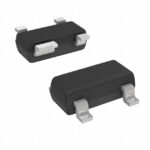 MAX6430DHUS+T

The activity of extra discounts on wholesale prices is in full swing…
Please fill in your contact information and we will send you the latest wholesale price list.





