 ChipApex | Global Electronic Components Supplier

SEARCH
Search Product
Search Post
— IC芯片 | 连接器 | 传感器 | 被动器件 —
Search productSearch post
— IC芯片 | 连接器 | 传感器 | 被动器件 —
Consult the customer manager about the wholesale price.
consultation hotline:86-132-6715-2157
email:[email protected]
Contact the product manager for consultation. One-stop consultation is available.
Do you want a lower wholesale price? Please send us your inquiry and we will reply immediately.
The MAX6520EUR is a low-power, precision, three-terminal series voltage reference IC manufactured by Analog Devices Inc./Maxim Integrated. It provides a fixed output voltage of 1.2V with an initial accuracy of ±1%. The device operates within an input voltage range of 2V to 3.6V and draws a maximum supply current of 40µA. It features a temperature coefficient of 50ppm/°C and supports a maximum shunt current of 400µA. The component functions reliably across an operating temperature range of -40°C to +85°C and is housed in a compact SOT-23-3 surface-mount package.
Verify the specific suffix (e.g., EUR) against the manufacturer's official datasheet to confirm pinout, tolerance grade, and packaging configuration. Ensure compatibility with your system's input voltage range and thermal requirements. Cross-reference part numbers with authorized distributors to avoid counterfeit components. Confirm RoHS compliance status if required by your manufacturing standards.
Select this component when a low-cost, low-power voltage reference is needed for 3V battery-powered applications. It is suitable for designs requiring a fixed 1.2V reference with moderate precision (±1%) and a 50ppm/°C temperature coefficient. Consider the SOT-23-3 package size for PCB real estate constraints. Evaluate if the 400µA shunt current capability meets the load requirements of your downstream circuitry.
The MAX6520 belongs to the Maxim Integrated voltage reference family, designed for low-power applications. It serves as a cost-effective alternative to higher-precision references while maintaining stability in portable devices. The series offers various output voltages and packages, but the MAX6520 specifically targets the 1.2V niche for battery-operated systems where power efficiency is critical.
Publicly confirmed substitute part numbers are not available in the provided documentation. Consult the manufacturer's official selection guide or contact technical support for verified cross-references based on specific electrical and mechanical requirements.
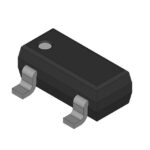 MAX6520EUR

The activity of extra discounts on wholesale prices is in full swing…
Please fill in your contact information and we will send you the latest wholesale price list.







