 ChipApex | Global Electronic Components Supplier

SEARCH
Search Product
Search Post
— IC芯片 | 连接器 | 传感器 | 被动器件 —
Search productSearch post
— IC芯片 | 连接器 | 传感器 | 被动器件 —
Consult the customer manager about the wholesale price.
consultation hotline:86-132-6715-2157
email:[email protected]
Contact the product manager for consultation. One-stop consultation is available.
Do you want a lower wholesale price? Please send us your inquiry and we will reply immediately.
The MAX6775XKC+T is a low-power, single-cell battery monitor from the Analog Devices Maxim Integrated portfolio. It provides 1%-accurate threshold detection for lithium-ion cells or multi-cell alkaline/NiCd/NiMH sources. The device features a fixed low-battery output with open-drain or push-pull options and includes hysteresis to prevent output chatter caused by input noise or voltage recovery. Designed for compact applications, it operates within a specified temperature range of -40°C to +85°C and utilizes a small SC-70-5 surface-mount package.
Verify the specific suffix 'XKC' against official Analog Devices documentation to confirm pinout configuration and output type. Ensure the component meets RoHS compliance requirements for your target market. Confirm availability status as distribution channels may report limited stock for this specific variant. Cross-reference the datasheet revision date to ensure compatibility with your design specifications.
Select this component when precise 1% accuracy is required for single-cell battery monitoring. The SC-70-5 package is ideal for space-constrained designs. Consider the fixed threshold nature of the XKC variant compared to adjustable resistor options in other series members. Evaluate the low-input leakage current benefits if large sensing resistors are utilized in the application circuit.
This part belongs to the MAX6775–MAX6781 family of low-power battery monitors. These devices are designed to replace traditional discrete comparator solutions in battery-powered applications. The family offers both single and dual output configurations, catering to various monitoring needs while maintaining a minimal physical footprint through µDFN and SC-70 packaging options.
Consult official substitution guides for equivalent parts within the MAX6775 series. Verify that alternative components match the SC-70-5 package dimensions and electrical characteristics. Ensure any substitute supports the same operating temperature range and low-battery output logic requirements.
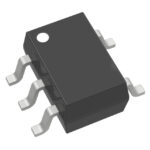 MAX6775XKC+T

The activity of extra discounts on wholesale prices is in full swing…
Please fill in your contact information and we will send you the latest wholesale price list.





