 ChipApex | Global Electronic Components Supplier
SEARCH
Search Product
Search Post
— IC芯片 | 连接器 | 传感器 | 被动器件 —
Search productSearch post
— IC芯片 | 连接器 | 传感器 | 被动器件 —
Consult the customer manager about the wholesale price.
consultation hotline:86-132-6715-2157
email:[email protected]
Contact the product manager for consultation. One-stop consultation is available.
Do you want a lower wholesale price? Please send us your inquiry and we will reply immediately.
The MAX7412EUA+ is a fifth-order, lowpass, elliptic switched-capacitor filter operating from a single +3V supply. It provides a sharp rolloff with a transition ratio of 1.6 and typically 53dB of stopband rejection. The corner frequency is clock-tunable from 1Hz to 15kHz using either an internal oscillator or external clock. Supply current is 1.2mA in operating mode and reduces to 0.2µA in shutdown mode. The device features low output offset (±4mV) and low distortion (-80dB THD + Noise). It is housed in an 8-pin µMAX package and operates over the -40°C to +85°C temperature range.
Verify the component matches the specific +3V supply requirement and 8-pin µMAX package configuration. Confirm that the ordering suffix corresponds to the extended industrial temperature range (-40°C to +85°C). Ensure compatibility with the system's clocking scheme, as the filter requires a precise clock signal to define the corner frequency. Check for any specific handling requirements associated with the surface-mount package.
Select this component when a fifth-order elliptic response is required within a single +3V supply system. It is suitable for applications needing a tunable corner frequency between 1Hz and 15kHz. Consider the internal oscillator or external clock options based on the required cutoff-frequency control precision. Evaluate the low-power shutdown feature if power conservation is critical during idle periods.
The MAX7412EUA+ belongs to the MAX7408/MAX7411/MAX7412/MAX7415 family of fifth-order, lowpass, elliptic, switched-capacitor filters. This family shares similar architectural features but differs in operating voltage and transition ratio. The MAX7412 specifically operates at +3V and offers a transition ratio of 1.6, distinguishing it from the +5V variants and those with sharper rolloff characteristics.
The MAX7415 is a direct functional substitute within the same family, sharing the +3V operating voltage and 8-pin µMAX package. However, the MAX7415 has a transition ratio of 1.25 instead of 1.6, resulting in a steeper rolloff but lower stopband rejection (37dB vs 53dB). Verify if this change in filter response meets the application requirements.
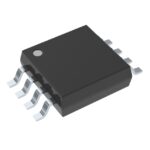 MAX7412EUA+
The activity of extra discounts on wholesale prices is in full swing…
Please fill in your contact information and we will send you the latest wholesale price list.






