 ChipApex | Global Electronic Components Supplier
SEARCH
Search Product
Search Post
— IC芯片 | 连接器 | 传感器 | 被动器件 —
Search productSearch post
— IC芯片 | 连接器 | 传感器 | 被动器件 —
Consult the customer manager about the wholesale price.
consultation hotline:86-132-6715-2157
email:[email protected]
Contact the product manager for consultation. One-stop consultation is available.
Do you want a lower wholesale price? Please send us your inquiry and we will reply immediately.
The MAX7414CUA+ is a fifth-order, lowpass switched-capacitor filter featuring a Butterworth response. It operates from a single +3V supply with a typical current draw of 1.2mA and reduces to 0.2µA in shutdown mode. The corner frequency is tunable between 0.001kHz and 15kHz using a fixed 100:1 clock-to-corner ratio. Key electrical parameters include an output offset voltage of ±4mV (max ±25mV), a power-supply rejection ratio of 70dB, and a total harmonic distortion plus noise of -81dB. The device is housed in an 8-pin µMAX package and supports operation within a temperature range of 0°C to +70°C.
Verify the specific suffix 'CUA+' against official Analog Devices documentation to confirm the commercial temperature range and lead-free packaging status. Ensure the design utilizes a +3V single supply, as this variant differs from the +5V MAX7410. Confirm that the application circuitry accommodates the 8-pin µMAX package dimensions and thermal requirements for the specified operating environment.
Select the MAX7414CUA+ when a maximally flat Butterworth response is required for signals processed on a +3V rail. This component is suitable for designs needing a tunable cutoff frequency up to 15kHz with minimal power consumption. Engineers must ensure the driving source impedance remains below 10% of the filter's input impedance to maintain signal integrity and performance specifications.
This component belongs to the MAX7409/MAX7410/MAX7413/MAX7414 family of fifth-order lowpass switched-capacitor filters. While sharing identical topology and pinouts, the MAX7414 is distinguished by its Butterworth response and +3V operating voltage requirement. It serves as the low-voltage counterpart to the MAX7410, which operates at +5V, offering flexibility for battery-powered or low-voltage system architectures.
The MAX7410CUA+ is a direct functional substitute if the system can support a +5V supply instead of +3V. For Bessel response requirements, the MAX7413CUA+ provides equivalent filtering characteristics with fast settling times. Verify that any replacement maintains the same 8-pin µMAX footprint and meets the specific temperature range constraints of the original design.
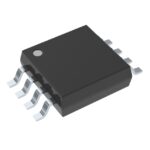 MAX7414CUA+
The activity of extra discounts on wholesale prices is in full swing…
Please fill in your contact information and we will send you the latest wholesale price list.





