 ChipApex | Global Electronic Components Supplier
SEARCH
Search Product
Search Post
— IC芯片 | 连接器 | 传感器 | 被动器件 —
Search productSearch post
— IC芯片 | 连接器 | 传感器 | 被动器件 —
Consult the customer manager about the wholesale price.
consultation hotline:86-132-6715-2157
email:[email protected]
Contact the product manager for consultation. One-stop consultation is available.
Do you want a lower wholesale price? Please send us your inquiry and we will reply immediately.
The MAX8667ETEAB+T is a quad-output power management IC from the Maxim Integrated family, designed for portable electronics. It integrates two synchronous buck converters and two low-dropout linear regulators within a single 16-pin TQFN package. The device operates from an input voltage range of 2.8V to 5.5V. Output configurations include a 1.2V/600mA buck, a 1.8V/1.2A buck, and a 2.8V/300mA LDO, with a fourth output available. Switching frequencies are set at 1.5MHz for the DC-DC sections. The component supports surface-mount installation and functions reliably across an industrial temperature range of -40°C to +85°C.
Verify the exact suffix configuration against official Analog Devices documentation before procurement. Confirm that the 'ETEAB' designation matches the required pinout and thermal pad specifications for your PCB layout. Ensure compatibility with RoHS standards if applicable to your manufacturing region. Cross-reference the datasheet revision history to confirm no recent design changes affect functionality or pin assignments.
Select this component when a compact solution is needed to generate multiple distinct voltage rails from a single source. The combination of synchronous buck and LDO outputs allows for optimized efficiency where needed and low noise regulation for sensitive analog circuits. Evaluate the total output current requirements against the specific channel ratings to ensure adequate headroom for peak loads during system operation.
This part belongs to the MAX8667 series, which is specifically engineered for applications like pulse oximeters and other portable medical devices. The series focuses on providing integrated power solutions that reduce board space and simplify design complexity by consolidating multiple regulator functions into a single small-footprint package.
Check for direct pin-compatible alternatives within the same product family. Verify that any substitute maintains the same output voltage and current specifications. Ensure the replacement package type matches the existing footprint to avoid PCB redesign efforts.
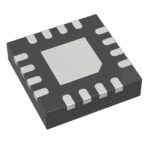 MAX8667ETEAB+T
The activity of extra discounts on wholesale prices is in full swing…
Please fill in your contact information and we will send you the latest wholesale price list.





