 ChipApex | Global Electronic Components Supplier
SEARCH
Search Product
Search Post
— IC芯片 | 连接器 | 传感器 | 被动器件 —
Search productSearch post
— IC芯片 | 连接器 | 传感器 | 被动器件 —
Consult the customer manager about the wholesale price.
consultation hotline:86-132-6715-2157
email:[email protected]
Contact the product manager for consultation. One-stop consultation is available.
Do you want a lower wholesale price? Please send us your inquiry and we will reply immediately.
The MAX8667ETEHR+T is a quad-output power management IC featuring two synchronous buck converters and two low-dropout linear regulators. It operates within an input voltage range of 2.8 V to 5.5 V, supporting output voltages from 600 mV to 3.3 V with up to 1.2 A current capability. The device integrates a fixed 1.5 MHz switching frequency and functions across a temperature range of -40°C to +85°C. Packaged in a 16-TQFN (3x3) surface-mount format, it serves as a compact solution for mobile electronics requiring efficient multi-rail power distribution.
Verify component authenticity by checking manufacturer markings against official datasheet specifications. Confirm the package type matches the 16-TQFN standard. Ensure the part number suffix aligns with the required thermal and electrical characteristics. Cross-reference the manufacturing date code to ensure compliance with current environmental regulations. Validate supplier documentation for traceability and quality assurance standards.
Select this component when designing circuits requiring four distinct power rails from a single source. Evaluate the total load current requirements against the individual regulator capabilities. Consider the thermal performance within the TQFN package for the specific application environment. Verify that the input voltage range matches the system's power supply architecture. Assess the need for synchronous rectification efficiency versus simpler linear regulation options.
This device belongs to the MAX8667 family of power management integrated circuits designed for portable electronics. It consolidates multiple voltage regulation functions into a single chip to reduce board space and component count. The family targets applications where power efficiency and size are critical constraints. It complements other Maxim Integrated PMIC solutions for complete system power architectures.
The MAX8667ETEAA+T is a documented substitute within the same product family. Verify pin compatibility and electrical specifications before substitution. Ensure the alternative package variant meets the thermal and mechanical requirements of the design.
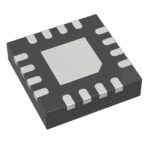 MAX8667ETEHR+T
The activity of extra discounts on wholesale prices is in full swing…
Please fill in your contact information and we will send you the latest wholesale price list.





