 ChipApex | Global Electronic Components Supplier
SEARCH
Search Product
Search Post
— IC芯片 | 连接器 | 传感器 | 被动器件 —
Search productSearch post
— IC芯片 | 连接器 | 传感器 | 被动器件 —
Consult the customer manager about the wholesale price.
consultation hotline:86-132-6715-2157
email:[email protected]
Contact the product manager for consultation. One-stop consultation is available.
Do you want a lower wholesale price? Please send us your inquiry and we will reply immediately.
The MAX9725DETC+T is a fixed-gain stereo headphone amplifier from the DirectDrive series, manufactured by Analog Devices Inc./Maxim Integrated. It operates on a single 0.9V to 1.8V supply and delivers up to 20mW per channel into a 32Ω load with 0.006% THD+N. The device features a fixed voltage gain of -4V/V, an inverting charge pump for ground-referenced outputs, and low-power shutdown mode reducing current to 0.6µA. It includes integrated click-and-pop suppression, short-circuit protection, and ±8kV ESD protection. The component is housed in a 12-pin thin QFN package (4mm x 4mm x 0.8mm) and operates over an extended temperature range of -40°C to +85°C.
Verify the specific suffix 'ETC' corresponds to the 12-pin Thin QFN package configuration as indicated in official documentation. Confirm that the '+TG45' designation aligns with lead-free and RoHS compliance requirements for your manufacturing process. Ensure the fixed gain variant matches the system design needs, as this part does not support external feedback resistor adjustment.
Select this model when a fixed high gain of -4V/V is required for direct drive applications without external feedback networks. Consider the 12-pin Thin QFN package for space-constrained designs where board area is limited. Verify that the single-supply voltage range of 0.9V to 1.8V aligns with the available battery or power source in the target application.
The MAX9725 family includes variants with different fixed gains (-2V/V, -1.5V/V, -1V/V) and an adjustable gain version (MAX9725E). The MAX9725DETC+T specifically denotes the -4V/V gain option packaged in a 12-pin Thin QFN format. Other family members may utilize UCSP packages or offer different gain settings to accommodate various input signal levels and impedance matching requirements.
Public confirmed substitute part numbers are not provided in the source material.
It generates a ground-referenced output using an internal charge pump, eliminating the need for large, expensive DC-blocking capacitors on the output, which saves board space and improves low-frequency response.
The SHDN pin controls the low-power shutdown mode. Driving it low disables the amplifiers and charge pump, reducing supply current to approximately 0.6µA.
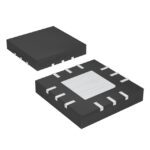 MAX9725DETC+T
The activity of extra discounts on wholesale prices is in full swing…
Please fill in your contact information and we will send you the latest wholesale price list.





