 ChipApex | Global Electronic Components Supplier
SEARCH
Search Product
Search Post
— IC芯片 | 连接器 | 传感器 | 被动器件 —
Search productSearch post
— IC芯片 | 连接器 | 传感器 | 被动器件 —
Consult the customer manager about the wholesale price.
consultation hotline:86-132-6715-2157
email:[email protected]
Contact the product manager for consultation. One-stop consultation is available.
Do you want a lower wholesale price? Please send us your inquiry and we will reply immediately.
The MC100EP195MNR4G is a programmable delay chip designed for clock deskewing and timing adjustment in high-speed digital systems. It provides variable delay for differential NECL/PECL input transitions with a typical maximum input clock frequency exceeding 1.2 GHz. The device offers a programmable range from 0 ns to 10 ns, with a total delay range of 2.2 ns to 12.2 ns in 10 ps increments. Operating in PECL mode requires VCC between 3.0 V and 3.6 V with VEE at 0 V, while NECL mode uses VCC at 0 V and VEE between -3.0 V and -3.6 V. It features open input default states, safety clamps on inputs, and a logic high on the EN pin forcing Q low. Data inputs D[10:0] accept ECL, LVCMOS, or LVTTL signals. Packaged in a QFN-32 surface-mount format, it operates within a temperature range of -40°C to +85°C.
Verify the specific suffix MNR4G against official datasheets to confirm tape-and-reel packaging and RoHS compliance status. Ensure voltage supply configurations match the required PECL or NECL operating modes. Confirm moisture sensitivity level handling requirements during storage and assembly processes.
Select this component when sub-nanosecond resolution timing adjustments are required for differential clock lines. Compare against fixed delay lines if programmability is not needed. Verify that the 10 ps increment resolution meets the system's jitter tolerance specifications. Ensure the QFN-32 package footprint fits the PCB layout constraints.
This part belongs to the MC100EP195B series of programmable delay chips from onsemi. It is functionally related to the MC10E195 but optimized for 3.3V ECL operation. The series is commonly used in applications requiring dynamic timing alignment of high-frequency clock signals.
Publicly confirmed substitute part numbers are not available in the provided documentation. Verify compatibility with existing board designs before considering alternative components.


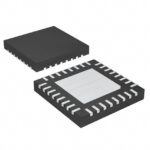 MC100EP195MNR4G
The activity of extra discounts on wholesale prices is in full swing…
Please fill in your contact information and we will send you the latest wholesale price list.



