 ChipApex | Global Electronic Components Supplier
SEARCH
Search Product
Search Post
— IC芯片 | 连接器 | 传感器 | 被动器件 —
Search productSearch post
— IC芯片 | 连接器 | 传感器 | 被动器件 —
Consult the customer manager about the wholesale price.
consultation hotline:86-132-6715-2157
email:[email protected]
Contact the product manager for consultation. One-stop consultation is available.
Do you want a lower wholesale price? Please send us your inquiry and we will reply immediately.
The MC10E196FNR2G is a programmable delay chip (PDC) designed for accurate differential ECL input edge placement. It features a digitally selectable resolution of approximately 20 ps using seven address inputs and an analog FTUNE input for finer linear adjustment. The device provides a worst-case delay range of 2.0 ns with a maximum toggle frequency exceeding 1.0 GHz. It operates in PECL mode (VCC = 4.2 V to 5.7 V, VEE = 0 V) or NECL mode (VCC = 0 V, VEE = -4.2 V to -5.7 V). Power supply current is typically 156 mA at 25°C. The component is housed in a PLCC-28 package.
Verify the specific ordering suffix to confirm the package type and environmental compliance. The FNR2G suffix indicates a lead-free PLCC-28 package supplied in a tape and reel format containing 500 units. Confirm moisture sensitivity level requirements during storage and handling procedures before assembly.
Select this component when sub-nanosecond programmable delay resolution is required for ECL signals. The inclusion of the FTUNE pin distinguishes it from the MC10E195, offering enhanced analog tuning capabilities. Ensure the design supports the necessary power supply configurations for either PECL or NECL operation modes.
This part belongs to the MC10E/100E series of ECL logic components manufactured by onsemi. The 100 Series variant includes temperature compensation, whereas the standard 10E Series does not. Both variants share identical functional characteristics and pinouts within the same family.
The MC10E195 serves as a related component but lacks the analog FTUNE input found in the MC10E196. Substitution requires evaluating whether the additional analog tuning capability is necessary for the specific application timing constraints.
The FTUNE input applies an analog voltage to an internal linear ramp, allowing the device to achieve resolution finer than the 20 ps digital least significant bit (LSB).
The D7 input acts as a cascade control signal, enabling the chaining of multiple PDCs to increase the total programmable delay range without requiring external gating logic.
Yes, the device supports PECL mode with VCC between 4.2 V and 5.7 V and VEE at 0 V, as well as NECL mode with VCC at 0 V and VEE between -4.2 V and -5.7 V.
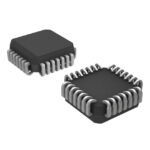 MC10E196FNR2G
The activity of extra discounts on wholesale prices is in full swing…
Please fill in your contact information and we will send you the latest wholesale price list.







