 ChipApex | Global Electronic Components Supplier
SEARCH
Search Product
Search Post
— IC芯片 | 连接器 | 传感器 | 被动器件 —
Search productSearch post
— IC芯片 | 连接器 | 传感器 | 被动器件 —
Consult the customer manager about the wholesale price.
consultation hotline:86-132-6715-2157
email:[email protected]
Contact the product manager for consultation. One-stop consultation is available.
Do you want a lower wholesale price? Please send us your inquiry and we will reply immediately.
The MC33742SPEG is a System Basis Chip (SBC) from NXP Semiconductors, housed in a 28-pin SOICW package. It integrates a high-speed CAN transceiver compliant with CAN 2.0 and an SPI interface operating up to 4.0 MHz. The device features a fixed 5.0 V regulator delivering 200 mA at the VDD pin, alongside a second 5.0 V regulator capability using an external pass transistor. It supports four main modes: Normal, Standby, Stop, and Sleep. Key electrical parameters include a supply voltage range of 5.5 V to 18 V, an operating temperature range of -40 °C to 125 °C, and a typical reset duration of 3.5 ms.
Verify the specific ordering suffix 'PEG' corresponds to the 28-pin SOICW package variant when sourcing components. Confirm that the 'S' designation indicates the 3.5 ms typical reset duration characteristic, which differs from the standard 15 ms duration found in other variants within the same family. Ensure compatibility with the required thermal and electrical specifications for the target application environment.
Select this component when a compact 28-pin solution is preferred over the 48-pin QFN option. The S variant provides a shorter reset duration suitable for applications requiring faster system recovery times compared to the standard model. Verify that the external circuitry can support the V2 regulator requirements if a second 5.0 V rail is necessary for the design.
This part belongs to the MC33742 series of System Basis Chips designed by Freescale Semiconductor, now NXP Semiconductors. The series combines power management and communication interfaces into a single device. The MC33742SPEG specifically denotes the version with the enhanced short reset duration feature, distinguishing it from the base MC33742 model while sharing the same physical package and core functionality.
The MC33742PEG serves as a functional alternative but exhibits a different reset duration (15 ms vs. 3.5 ms). Substitution requires verifying that the longer reset time does not violate system timing constraints. No other direct substitutes are documented in the provided source material.
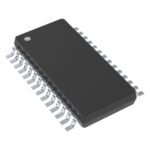 MC33742SPEG
The activity of extra discounts on wholesale prices is in full swing…
Please fill in your contact information and we will send you the latest wholesale price list.






