 ChipApex | Global Electronic Components Supplier

SEARCH
Search Product
Search Post
— IC芯片 | 连接器 | 传感器 | 被动器件 —
Search productSearch post
— IC芯片 | 连接器 | 传感器 | 被动器件 —
Consult the customer manager about the wholesale price.
consultation hotline:86-132-6715-2157
email:[email protected]
Contact the product manager for consultation. One-stop consultation is available.
Do you want a lower wholesale price? Please send us your inquiry and we will reply immediately.
The MC33771CTP1AER2 is a 14-channel lithium-ion battery cell controller IC designed for automotive and industrial applications. It operates within a supply voltage range of 9.6 V to 61.6 V, with transient tolerance up to 75 V. The device features integrated passive balancing MOSFETs capable of 300 mA current. It supports isolated daisy-chain communication at 2 Mbps or standard SPI at 4 Mbps, accommodating up to 63 nodes in a chain. The component includes an integrated coulomb counter, temperature sensors, and comprehensive fault diagnostics.
Verify the specific ordering suffix against the manufacturer's official documentation to ensure correct package type and reel configuration. Confirm that the requested variant matches the required safety certification level and communication interface specifications for the target application environment before finalizing procurement orders.
Select this component when designing systems requiring precise synchronization between cell voltage and current measurements. It is suitable for applications demanding high node counts in daisy-chain topologies. Ensure the design accommodates the specified operating voltage range and thermal requirements for the intended automotive or industrial deployment scenario.
This part belongs to the MC33771 series of battery cell controllers from NXP Semiconductors. It serves as an analog front-end for managing multiple lithium-ion cells in series. The device simplifies BMS design by integrating measurement, balancing, and communication interfaces into a single chip, reducing component count and board space requirements.
The MC33771C is the functional equivalent within the series. Verify pinout compatibility and software register mapping if substituting between variants. Check datasheets for differences in averaging capabilities and maximum node limits in daisy-chain configurations.
The device supports up to 63 nodes in one isolated daisy chain when used with compatible transceivers.
Yes, it features synchronized measurement capabilities for both cell voltages and currents via its integrated coulomb counter.
It supports standard SPI communication at 4 Mbps and isolated daisy-chain communication at 2 Mbps using twisted pair differential signaling.
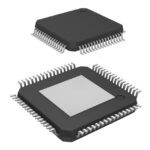 MC33771CTP1AER2

The activity of extra discounts on wholesale prices is in full swing…
Please fill in your contact information and we will send you the latest wholesale price list.





