 ChipApex | Global Electronic Components Supplier

SEARCH
Search Product
Search Post
— IC芯片 | 连接器 | 传感器 | 被动器件 —
Search productSearch post
— IC芯片 | 连接器 | 传感器 | 被动器件 —
Consult the customer manager about the wholesale price.
consultation hotline:86-132-6715-2157
email:[email protected]
Contact the product manager for consultation. One-stop consultation is available.
Do you want a lower wholesale price? Please send us your inquiry and we will reply immediately.
The MC33772BTC0AE is a six-channel lithium-ion battery cell controller IC designed for automotive and industrial applications. It operates within a supply voltage range of 6 V to 30 V, with a maximum operating temperature of +125°C and a minimum of -40°C. The device features an LQFP-48 package and supports SMD/SMT installation. It provides a 5 V output at 5 mA and consumes 8 mA during operation. Key specifications include a total stack voltage measurement error of 0.8 mV and integrated passive balancing MOSFETs rated at 300 mA.
Verify the specific suffix 'BTC0AE' against official NXP documentation to confirm pinout, thermal characteristics, and packaging details. Ensure compatibility with the intended MCU interface, as this variant supports TPL communication. Confirm RoHS compliance status and moisture sensitivity levels prior to assembly planning. Cross-reference the part number with the manufacturer's current production status to ensure availability and long-term supply stability.
Select this component for applications requiring high-precision voltage measurement with a maximum total error of 0.8 mV. It is suitable for designs needing integrated passive balancing without external discrete components. Consider this IC when isolation between the high-voltage battery stack and the low-voltage control unit is required via transformer coupling. Ensure the system architecture supports the 6-channel limit and utilizes the available GPIO/temperature inputs effectively.
The MC33772B series belongs to NXP's portfolio of advanced battery management solutions, specifically engineered for safety-critical environments. It is compatible with MPC5xxx 32-bit MCU families and supports ISO 26262 functional safety standards up to ASIL D. The device is part of a long-term supply program, ensuring availability for automotive and industrial product lifecycles exceeding ten years.
The MC33772CTC0AE is a confirmed substitute within the same family, offering similar functionality in the HLQFP48 package. Verify that any replacement maintains compatibility with the existing TPL communication protocol and PCB footprint constraints.
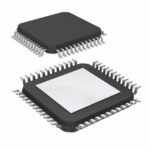 MC33772BTC0AE

The activity of extra discounts on wholesale prices is in full swing…
Please fill in your contact information and we will send you the latest wholesale price list.




