 ChipApex | Global Electronic Components Supplier

SEARCH
Search Product
Search Post
— IC芯片 | 连接器 | 传感器 | 被动器件 —
Search productSearch post
— IC芯片 | 连接器 | 传感器 | 被动器件 —
Consult the customer manager about the wholesale price.
consultation hotline:86-132-6715-2157
email:[email protected]
Contact the product manager for consultation. One-stop consultation is available.
Do you want a lower wholesale price? Please send us your inquiry and we will reply immediately.
The MC33772BTC0AER2 is a six-channel lithium-ion battery cell controller IC from NXP Semiconductors, designed for automotive and industrial applications. It operates within a supply voltage range of 5.0V to 30V, with transient tolerance up to 42V in SPI mode. The device features six dedicated battery voltage measurement channels and supports stack voltage monitoring. It integrates synchronous current sensing with programmable gain amplifiers, achieving accuracy of ±0.5% across milliampere to kiloampere ranges. The component includes an onboard coulomb counter and passive balancing MOSFETs rated at 300mA. Communication interfaces include isolated TPL (2.0Mbps) and SPI (4.0Mbps). It is housed in a 48-LQFP package.
Verify the specific suffix 'R2' indicates reel packaging when sourcing. Confirm the part status against manufacturer updates as some variants may be obsolete. Ensure compatibility with required isolation components if using TPL communication. Check RoHS compliance certificates for regulatory adherence. Validate package type matches design requirements before finalizing procurement orders.
Select this model for applications requiring high-accuracy current sensing and integrated balancing without external discrete components. Consider the 48-pin LQFP package constraints for PCB layout. Evaluate thermal performance given the operating temperature range. Verify MCU interface compatibility with either SPI or TPL protocols. Assess safety integrity level requirements against the device's ISO 26262 support capabilities.
This component belongs to the MC33772B series of battery cell controllers. It is engineered for high-voltage battery stacks in automotive environments. The series supports up to six cells per chip, allowing scalable system architectures. It is compatible with NXP MPC5xxx microcontroller families. The device emphasizes functional safety and robustness for critical powertrain applications.
Publicly confirmed substitute part numbers are not available in the provided documentation. Consult NXP official resources for direct replacements or pin-compatible alternatives within the same product family.
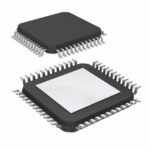 MC33772BTC0AER2

The activity of extra discounts on wholesale prices is in full swing…
Please fill in your contact information and we will send you the latest wholesale price list.




