 ChipApex | Global Electronic Components Supplier

SEARCH
Search Product
Search Post
— IC芯片 | 连接器 | 传感器 | 被动器件 —
Search productSearch post
— IC芯片 | 连接器 | 传感器 | 被动器件 —
Consult the customer manager about the wholesale price.
consultation hotline:86-132-6715-2157
email:[email protected]
Contact the product manager for consultation. One-stop consultation is available.
Do you want a lower wholesale price? Please send us your inquiry and we will reply immediately.
The MC33772CTA2AER2 is a six-channel lithium-ion battery cell controller IC from NXP Semiconductors, designed for automotive and industrial applications. It operates within a supply voltage range of 6V to 30V with transient tolerance up to 40V. The device features six battery voltage measurement channels with a maximum total stack voltage measurement error of 0.8mV and seven ADC/GPIO/temperature sensor inputs. It integrates a current sensor with PGA offering ±0.5% accuracy from milliamps to kiloamps, alongside an integrated Coulomb counter. Communication is supported via isolated 2.0Mbps TPL or 4Mbps SPI interfaces. It includes onboard 300mA passive battery balancing MOSFETs and supports ISO 26262 ASIL D safety capabilities.
Verify the specific suffix 'R2' indicates tape and reel packaging when sourcing. Confirm AEC-Q100 qualification status for automotive deployment requirements. Ensure compatibility with the host MCU's SPI or TPL interface protocols. Check for RoHS compliance documentation prior to integration into regulated assemblies.
Select this component for applications requiring advanced cell monitoring with integrated current sensing and Coulomb counting. The TPL interface is suitable for daisy-chaining multiple nodes in complex battery architectures. Consider the ASIL D capability for safety-critical automotive environments. Evaluate the 48-pin LQFP package constraints against PCB layout requirements.
This part belongs to the MC33772C series of battery cell controllers, which are optimized for high-performance lithium-ion battery management. It serves as an alternative to previous generations like the MC33772B by offering enhanced communication flexibility and average voltage measurement features. The device is widely used in modern electric vehicle platforms and stationary storage solutions.
MC33772CTP2AE is a verified substitute within the same family offering similar functional capabilities.
Yes, it includes onboard 300mA low Rdson passive battery balancing MOSFETs with diagnostic functions and programmable timers.
The device supports up to 63 nodes in a single TPL daisy-chain topology with ring-back support.
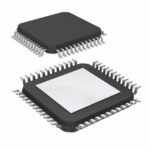 MC33772CTA2AER2

The activity of extra discounts on wholesale prices is in full swing…
Please fill in your contact information and we will send you the latest wholesale price list.




