ChipApex | Global Electronic Components Supplier

SEARCH
Search Product
Search Post
— IC芯片 | 连接器 | 传感器 | 被动器件 —
Search productSearch post
— IC芯片 | 连接器 | 传感器 | 被动器件 —
Consult the customer manager about the wholesale price.
consultation hotline:86-132-6715-2157
email:[email protected]
Contact the product manager for consultation. One-stop consultation is available.
Do you want a lower wholesale price? Please send us your inquiry and we will reply immediately.
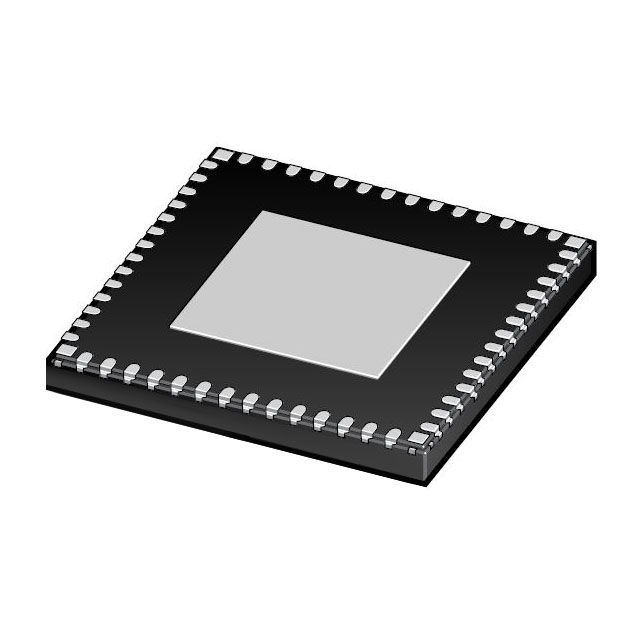
The MC33GD3000EP is a three-phase brushless motor pre-driver IC designed for automotive and industrial applications. It integrates three half-bridge drivers, each capable of driving two N-channel MOSFETs with peak currents ranging from 1 A to 2.5 A. The device operates on a single power supply within an extended voltage range of 6 V to 60 V, featuring 75 V transient protection. Key technical specifications include a programmable dead time between 50 ns and 12 μs via SPI, integrated VDS sensing for overcurrent protection, and a current shunt amplifier for phase error detection. It supports 3.3 V and 5.0 V logic interfaces and includes a charge pump for low-voltage FET drive.
Verify the specific suffix 'EP' against official NXP documentation to confirm package type and temperature grade. Ensure the ordering part number matches the exact revision required for your design. Confirm compliance with AEC-Q100 standards if used in automotive contexts. Check for any recent product change notifications that may affect pinout or electrical characteristics before finalizing procurement.
Select this component when designing three-phase BLDC or PMSM motor drives requiring high-side and low-side gate driving capabilities. It is suitable for applications needing integrated fault detection such as desaturation and phase failure. Consider its wide operating voltage range and SPI configurability for flexible system integration. Ensure the external MOSFETs are compatible with the driver's peak current output and voltage ratings.
The MC33GD3000EP belongs to NXP's GD3000 family of three-phase brushless motor pre-drivers. This series is engineered for robust performance in demanding environments, offering integrated protection features to safeguard external power stages. It complements NXP's S32K microcontroller portfolio, providing a complete solution for advanced motor control algorithms like Field Oriented Control (FOC).
Consult official NXP substitution guides for form-fit-function compatible alternatives. Verify that any replacement maintains the same voltage range, current capability, and interface protocols.
 MC33GD3000EP

The activity of extra discounts on wholesale prices is in full swing…
Please fill in your contact information and we will send you the latest wholesale price list.