 ChipApex | Global Electronic Components Supplier
SEARCH
Search Product
Search Post
— IC芯片 | 连接器 | 传感器 | 被动器件 —
Search productSearch post
— IC芯片 | 连接器 | 传感器 | 被动器件 —
Consult the customer manager about the wholesale price.
consultation hotline:86-132-6715-2157
email:[email protected]
Contact the product manager for consultation. One-stop consultation is available.
Do you want a lower wholesale price? Please send us your inquiry and we will reply immediately.
The MC34262DG is a Critical Conduction Mode (CRM) Power Factor Controller manufactured by onsemi, designed for pre-converters in electronic ballasts and offline power supplies. It operates within a supply voltage range of 12V to 28V and supports switching frequencies up to 50 kHz. The device functions across an operating temperature range of 0°C to +85°C and utilizes an 8-SOIC surface-mount package with a width of 3.90mm. Key electrical characteristics include a startup current of 250 µA and a maximum source/sink current capability of 200 mA.
Verify component authenticity through authorized distributors as the part is obsolete. Confirm RoHS compliance status, as original specifications may differ from current manufacturing standards. Check for available alternatives like the L6561D if new production is required. Ensure the 8-SOIC package matches your PCB footprint requirements before finalizing procurement decisions.
Select this controller for applications requiring critical conduction mode efficiency without complex control loops. The integrated zero-current detection simplifies design by reducing reverse recovery losses in output rectifiers. Consider the 8-SOIC package constraints for thermal management and board space. Evaluate the 12V to 28V supply range against your system's input voltage stability.
This component belongs to the MC34262/MC33262 family of power factor controllers. It shares functional similarities with other CRM controllers but is distinct in its specific internal architecture featuring a fast-start circuit and图腾柱 output stage. The DG suffix denotes the SOIC surface-mount variant, differentiating it from the PDIP through-hole version.
Public confirmed substitute part numbers include L6561D and L6561D013TR from STMicroelectronics. These devices offer similar CRM functionality and pin compatibility for direct replacement in existing designs.
It ensures the MOSFET turns on only when inductor current reaches zero, minimizing switching losses and allowing the use of lower-cost rectifiers with slower reverse recovery times.
The fast-start circuit pre-charges the compensation capacitor during initial startup, allowing the driver output to switch immediately and reducing start-up delay.
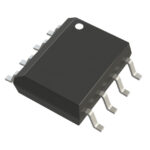 MC34262DG
The activity of extra discounts on wholesale prices is in full swing…
Please fill in your contact information and we will send you the latest wholesale price list.





