ChipApex | Global Electronic Components Supplier

SEARCH
Search Product
Search Post
— IC芯片 | 连接器 | 传感器 | 被动器件 —
Search productSearch post
— IC芯片 | 连接器 | 传感器 | 被动器件 —
Consult the customer manager about the wholesale price.
consultation hotline:86-132-6715-2157
email:[email protected]
Contact the product manager for consultation. One-stop consultation is available.
Do you want a lower wholesale price? Please send us your inquiry and we will reply immediately.
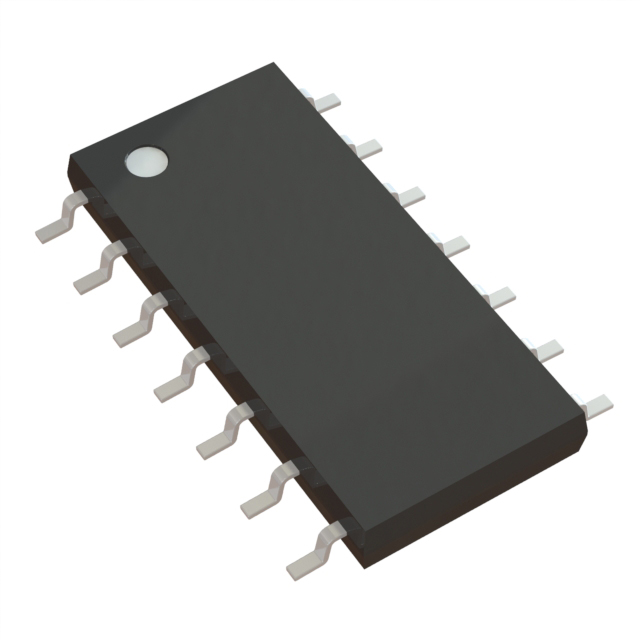
MC74ACT74MELG is listed in the Flip Flops range at ChipApex. The manufacturer field lists onsemi. Its product description is IC FF D-TYPE DUAL 1BIT 14SOEIAJ. Review the specifications below when checking this part for your BOM.
The MC74ACT74MELG is a dual D-type positive edge-triggered flip-flop manufactured by onsemi, belonging to the 74ACT logic series. It features asynchronous clear and set inputs with complementary outputs (Q and Q̅). The device operates within a supply voltage range of 4.5 V to 5.5 V. Key electrical parameters include a propagation delay of 11 ns, high-level output current of -24 mA, and low-level output current of 24 mA. It supports single-ended input and differential output configurations. The component is housed in a 14-SOIC package and functions reliably across an operating temperature range of -40°C to +85°C.
Verify the specific ordering suffix MELG against official datasheets to confirm package dimensions and tape-and-reel specifications. Ensure compatibility with standard SOIC-14 footprints during PCB layout. Confirm RoHS compliance status through manufacturer documentation prior to final procurement decisions.
Select this component when dual independent storage elements are required within a 5V CMOS environment. The ACT series offers faster switching speeds compared to standard AC variants while maintaining TTL input compatibility. Consider the 14-pin surface mount package for space-constrained designs requiring robust noise immunity and moderate drive capability.
This part belongs to the MC74ACT family of advanced CMOS logic devices. It provides enhanced performance over previous generations with reduced power consumption and increased speed. The dual flip-flop configuration allows for compact implementation of sequential logic functions without requiring multiple discrete components.
MC74ACT74DG
The asynchronous clear and set inputs operate independently of the clock signal. A low level on the clear input forces the Q output low, while a low level on the set input forces the Q output high.
Data from the D input is transferred to the Q output only upon the rising edge of the clock pulse. This ensures precise timing control for synchronous digital systems.
Explore related parts through Logic, Integrated Circuits (ICs), all product categories, ChipApex homepage.
 MC74ACT74MELG

The activity of extra discounts on wholesale prices is in full swing…
Please fill in your contact information and we will send you the latest wholesale price list.