 ChipApex | Global Electronic Components Supplier

SEARCH
Search Product
Search Post
— IC芯片 | 连接器 | 传感器 | 被动器件 —
Search productSearch post
— IC芯片 | 连接器 | 传感器 | 被动器件 —
Consult the customer manager about the wholesale price.
consultation hotline:86-132-6715-2157
email:[email protected]
Contact the product manager for consultation. One-stop consultation is available.
Do you want a lower wholesale price? Please send us your inquiry and we will reply immediately.
The MC74HC4053ADWG is a triple single-pole double-throw (SPDT) analog multiplexer/demultiplexer manufactured by onsemi. It utilizes silicon-gate CMOS technology to provide fast switching speeds and low ON resistance. The device features three independent switches, each configurable as a 2:1 mux/demux, controlled by digital select inputs A, B, and C. It operates with a digital supply voltage range of 2.0 V to 6.0 V and an analog supply range up to 12.0 V. Key electrical parameters include a maximum propagation delay of 45 ns at 6.0 V, a bandwidth of 120 MHz, and an OFF isolation of -60 dB at 1 MHz. The component is housed in a 16-pin SOIC-Wide package.
Verify the specific ordering suffix 'DWG' corresponds to the SOIC-Wide package and Pb-Free status before procurement. Confirm that the intended application environment falls within the specified operating temperature range of -55°C to +125°C. Ensure that the analog signal levels remain within the defined VCC and VEE limits to prevent device damage or functional failure.
Select this component when a triple-channel analog switching solution is required within a standard 16-pin footprint. The HC series compatibility ensures interoperability with other HC logic families. Consider the wide analog supply capability if signals exceed the digital logic voltage levels. Verify that the package width accommodates the PCB layout constraints associated with the SOIC-Wide form factor.
This part belongs to the MC74HC405xA family of high-performance silicon-gate CMOS analog multiplexers. It shares pinout compatibility with older metal-gate devices like the MC14053AB, facilitating direct upgrades in legacy designs. The family includes variants such as the MC74HC4051A (8-channel) and MC74HC4052A (4-channel), offering scalable channel counts for different system architectures.
Publicly confirmed substitute part numbers include MC74HC4053ADWR2G from onsemi. Other manufacturers offer functionally similar parts such as the SN74LV4053APW from Texas Instruments, though interface and voltage specifications should be verified against the original design requirements.
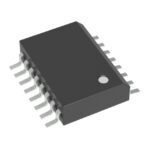 MC74HC4053ADWG

The activity of extra discounts on wholesale prices is in full swing…
Please fill in your contact information and we will send you the latest wholesale price list.





