 ChipApex | Global Electronic Components Supplier
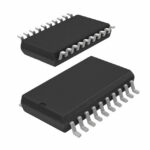
MC74LVX245M
Search Product
Search Post
— IC芯片 | 连接器 | 传感器 | 被动器件 —
Search productSearch post
— IC芯片 | 连接器 | 传感器 | 被动器件 —
Consult the customer manager about the wholesale price.
consultation hotline:86-132-6715-2157
email:[email protected]
Contact the product manager for consultation. One-stop consultation is available.
Do you want a lower wholesale price? Please send us your inquiry and we will reply immediately.
The MC74LVX245 is an advanced high-speed CMOS octal bus transceiver designed for two-way asynchronous communication between data buses. It operates within a DC supply voltage range of 2.0 V to 3.6 V and features 5 V-tolerant inputs, allowing compatibility with 5 V systems. The device includes power-down protection on inputs and balanced propagation delays. Key electrical characteristics include a typical propagation delay (tPD) of 4.7 ns at VCC = 3.3 V and a maximum quiescent supply current (ICC) of 40 µA at TA = 85 °C.
Verify the specific package suffix required for your design, such as DWR2G for SOIC-20 or DTR2G for TSSOP-20, as these determine shipping quantities and reel specifications. Confirm that the selected variant meets the moisture sensitivity level requirements for your assembly process. Ensure that the ordering information matches the exact marking diagram needed for traceability in your manufacturing workflow.
Select this component when designing systems requiring low-power, high-speed bidirectional data transfer between 3.3 V and 5 V domains. Consider the 5 V tolerance of the inputs if interfacing directly with legacy 5 V logic without additional level shifting circuitry. Evaluate the package options based on available board space and thermal dissipation needs, keeping in mind the maximum operating temperature range of -40 °C to +85 °C.
This part belongs to the LVX series of advanced high-speed CMOS logic devices from onsemi. It is functionally compatible with other standard logic families but optimized for lower voltage operation compared to traditional HC or HCT families. The device serves as a core interface solution in digital systems where data integrity and speed are critical across mixed-voltage environments.
Direct pin-compatible replacements may exist within the same LVX family or from other manufacturers offering equivalent octal bus transceivers. Verify that any substitute maintains the 5 V input tolerance and similar propagation delay characteristics to ensure system timing compliance.
No, a parasitic diode is formed between the bus and VCC terminals, preventing direct interface between 5.0 V and 3.0 V systems.
All floating (high impedance) input or I/O pins must be fixed by means of pullup or pulldown resistors or bus terminator ICs to prevent undefined states.
The direction is determined by the level of the T/R input; a low level directs data from B to A, while a high level directs data from A to B.
 MC74LVX245M
The activity of extra discounts on wholesale prices is in full swing…
Please fill in your contact information and we will send you the latest wholesale price list.