 ChipApex | Global Electronic Components Supplier

SEARCH
Search Product
Search Post
— IC芯片 | 连接器 | 传感器 | 被动器件 —
Search productSearch post
— IC芯片 | 连接器 | 传感器 | 被动器件 —
Consult the customer manager about the wholesale price.
consultation hotline:86-132-6715-2157
email:[email protected]
Contact the product manager for consultation. One-stop consultation is available.
Do you want a lower wholesale price? Please send us your inquiry and we will reply immediately.
The MC74LVX4052DTR2G-Q is a dual 4-to-1 analog multiplexer/demultiplexer manufactured by onsemi. It utilizes high-performance silicon-gate CMOS technology to achieve fast propagation delays and low ON resistance. The device operates with a digital supply voltage (VCC) ranging from 2.5 V to 6.0 V and an analog supply range (VCC − VEE) of -3.0 V to +3.0 V. Key electrical parameters include a maximum propagation delay of 40 ns at 2.5 V, a maximum ON resistance of 86 Ohms, and a bandwidth of 80 MHz. It features overvoltage tolerant inputs for level translation and break-before-make circuitry. The component is packaged in a TSSOP-16 case and carries the -Q suffix indicating AEC-Q100 qualification.
Verify the specific ordering suffix matches the required package type and tape-and-reel specifications. Confirm that the -Q suffix aligns with project requirements for automotive-grade components, as this indicates adherence to AEC-Q100 standards and PPAP capability. Ensure compatibility with the intended manufacturing site controls before finalizing procurement orders.
Select this component when dual independent 4-channel analog switching is required within a single package. It is suitable for designs needing operation across a wide temperature range of -55°C to +125°C. Consider the TSSOP-16 package constraints for PCB layout. Verify that the 86 Ohm maximum ON resistance meets the signal integrity requirements of the application.
This part belongs to the MC74LVX405x series of analog multiplexers, which share pinouts with legacy HC405nA and metal-gate MC1405nB devices. The -Q suffix specifically denotes automotive qualification, distinguishing it from standard commercial variants like the MC74LVX4052DTR2G. It offers enhanced reliability features for harsh environments while maintaining CMOS performance characteristics.
Direct replacements include other AEC-Q100 qualified dual 4:1 muxes from onsemi or compatible parts from other manufacturers meeting the same pinout and electrical specifications. Verify that any substitute maintains the 2.5 V to 6.0 V digital supply range and -3.0 V to +3.0 V analog supply capability.
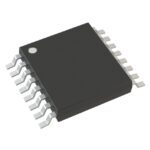 MC74LVX4052DTR2G-Q

The activity of extra discounts on wholesale prices is in full swing…
Please fill in your contact information and we will send you the latest wholesale price list.





