 ChipApex | Global Electronic Components Supplier

SEARCH
Search Product
Search Post
— IC芯片 | 连接器 | 传感器 | 被动器件 —
Search productSearch post
— IC芯片 | 连接器 | 传感器 | 被动器件 —
Consult the customer manager about the wholesale price.
consultation hotline:86-132-6715-2157
email:[email protected]
Contact the product manager for consultation. One-stop consultation is available.
Do you want a lower wholesale price? Please send us your inquiry and we will reply immediately.
The MC74LVXT4051D is an analog multiplexer/demultiplexer utilizing high-performance silicon-gate CMOS technology. It provides a single-pole, eight-position plus common-off configuration within a 16-pin SOIC package. The device operates on a digital supply voltage (VCC) ranging from 2.5 V to 6.0 V and supports an analog power supply range (VCC - VEE) of ±3.0 V to ±3.0 V. Key electrical parameters include a maximum propagation delay of 40 ns at 2.5 V, a maximum ON resistance of 86 Ω at 3.0 V, and a bandwidth of 80 MHz. It features break-before-make circuitry and over-voltage tolerant inputs compatible with standard TTL levels.
Verify the specific ordering suffix against the manufacturer's official documentation to confirm package type and environmental compliance. The 'D' suffix denotes the SOIC-16 package. Confirm RoHS status and lead-free availability through current datasheets, as manufacturing specifications may be updated without notice. Ensure compatibility with required operating temperature ranges before finalizing procurement.
Select this component when a low ON resistance and high linearity are required for analog signal paths. The LVXT series offers superior performance metrics compared to older metal-gate or High-Speed CMOS switches. Verify that the control logic levels match the system's TTL requirements and ensure the analog signal swing remains within the defined VCC and VEE boundaries to maintain optimal switch performance.
This device belongs to the MC74LVXT4051 family of analog multiplexers. It shares pinout compatibility with legacy devices such as the HC4051A and metal-gate MC14051B, facilitating direct upgrades in existing designs. The LVXT series represents a modernization of these functions using advanced silicon-gate CMOS processes to enhance speed and reduce power consumption.
Direct pin-compatible alternatives include the SN74LV4051 series from Texas Instruments. When substituting, verify that the replacement device meets the required ON resistance and propagation delay specifications for the specific application environment.
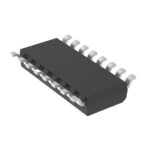 MC74LVXT4051D

The activity of extra discounts on wholesale prices is in full swing…
Please fill in your contact information and we will send you the latest wholesale price list.





