 ChipApex | Global Electronic Components Supplier

SEARCH
Search Product
Search Post
— IC芯片 | 连接器 | 传感器 | 被动器件 —
Search productSearch post
— IC芯片 | 连接器 | 传感器 | 被动器件 —
Consult the customer manager about the wholesale price.
consultation hotline:86-132-6715-2157
email:[email protected]
Contact the product manager for consultation. One-stop consultation is available.
Do you want a lower wholesale price? Please send us your inquiry and we will reply immediately.
The MCP1501T-12E/CHY is a buffered voltage reference from Microchip Technology, providing a fixed output of 1.25 V with an initial accuracy of ±0.1%. It operates within a supply voltage range of 1.65 V to 5.5 V and maintains a maximum temperature coefficient of 50 ppm/°C across the -40°C to +125°C operating range. The device features a typical operating current of 140 μA and can source or sink up to 20 mA. It is housed in a compact 6-Lead SOT-23 package.
Verify that the specific suffix 'CHY' corresponds to the 6-Lead SOT-23 package configuration as documented in official datasheets. Confirm AEC-Q100 automotive qualification status if required for the target application environment. Ensure input voltage remains within the specified 1.65 V to 5.5 V range during operation.
Select this component when a stable 1.25 V reference is needed in a small surface-mount footprint. The SOT-23-6 package offers space efficiency compared to larger SOIC options. Consider the 140 μA quiescent current for battery life calculations and verify thermal performance under maximum load conditions.
This part belongs to the MCP1501 family of high-precision buffered voltage references. The family includes various output voltages and packages, such as SOIC-8 and WDFN-8. The MCP1501 series is designed for applications requiring low noise and high stability, serving as a foundational reference for precision measurement and conversion systems.
Direct substitutes include other MCP1501 variants with different output voltages or packages, such as MCP1501-25E/SN. Verify pin compatibility and electrical specifications before substitution. Cross-reference with manufacturer documentation for equivalent automotive-grade parts if reliability standards differ.
In the 6-Lead SOT-23 package, the connection between the output driver and the feedback pin is internal. This design simplifies PCB layout by eliminating the need for external routing between these pins.
The SHDN (Shutdown) pin is a digital input that places the device into a low-power shutdown state when driven low. This feature allows for power conservation in battery-operated systems.
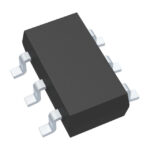 MCP1501T-12E/CHY

The activity of extra discounts on wholesale prices is in full swing…
Please fill in your contact information and we will send you the latest wholesale price list.





