 ChipApex | Global Electronic Components Supplier

SEARCH
Search Product
Search Post
— IC芯片 | 连接器 | 传感器 | 被动器件 —
Search productSearch post
— IC芯片 | 连接器 | 传感器 | 被动器件 —
Consult the customer manager about the wholesale price.
consultation hotline:86-132-6715-2157
email:[email protected]
Contact the product manager for consultation. One-stop consultation is available.
Do you want a lower wholesale price? Please send us your inquiry and we will reply immediately.
The MCP1501T-20E/RW is a buffered voltage reference from the MCP1501 series, manufactured by Microchip Technology. It provides a fixed output voltage of 2.048 V with an initial accuracy of ±0.1%. The device operates within a supply voltage range of 2.25 V to 5.5 V and features a maximum temperature coefficient of 50 ppm/°C across the -40°C to +125°C operating temperature range. It utilizes an 8-lead WDFN (2x2 mm) package in tape and reel format.
Verify the specific suffix 'RW' corresponds to the WDFN-8 tape and reel packaging configuration as documented in the official datasheet. Confirm that the 'E' designation aligns with the specified industrial temperature range requirements for your application environment before finalizing procurement orders.
Select this component when a stable 2.048 V reference is required with high precision and moderate drive strength. Ensure the input supply voltage remains above the minimum threshold of 2.25 V for proper regulation. Consider the thermal resistance characteristics of the WDFN package if significant self-heating or high ambient temperatures are expected in the design.
This part belongs to the MCP1501 family of high-precision buffered voltage references. The family offers various fixed output voltages and package options, including SOT-23, SOIC, and WDFN. The T-20 variant specifically denotes the 2.048 V output option, while the RW suffix indicates the specific reel packaging for surface mount assembly.
Direct substitutes within the same family include MCP1501T-20E/SN (SOIC-8) or MCP1501T-20E/CHY (SOT-23-6). Verify pinout compatibility and package dimensions before substituting to ensure mechanical fit on the PCB.
The device can drive up to 10 nF of capacitive load directly. For larger capacitors, a series resistor must be used to maintain stability, as detailed in the transient response graphs.
In the WDFN package, the FEEDBACK pin should be connected to the OUT pin at the device. This allows the feedback loop to compensate for any IR-drop caused by PCB trace resistance between the device and the load.
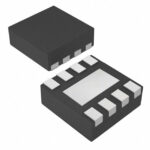 MCP1501T-20E/RW

The activity of extra discounts on wholesale prices is in full swing…
Please fill in your contact information and we will send you the latest wholesale price list.





