ChipApex | Global Electronic Components Supplier

SEARCH
Search Product
Search Post
Search productSearch post
Consult the customer manager about the wholesale price.
consultation hotline:86-132-6715-2157
email:[email protected]
Contact the product manager for consultation. One-stop consultation is available.
Do you want a lower wholesale price? Please send us your inquiry and we will reply immediately.
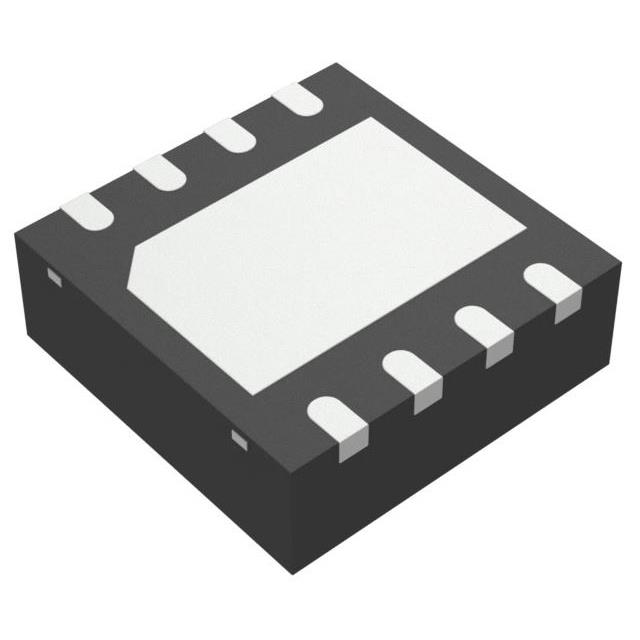
MCP2004A-E/MD is listed in the Drivers, Receivers, Transceivers range at ChipApex. The manufacturer field lists Microchip Technology. Its product description is IC TRANSCEIVER HALF 1/1 8DFN. Review the specifications below when checking this part for your BOM.
The MCP2004A-E/MD is a LIN bus compatible transceiver designed for automotive and industrial applications. It provides a bidirectional, half-duplex physical interface between a microcontroller and the LIN bus, supporting baud rates up to 20 Kbaud. The device operates within a continuous supply voltage range of 6.0V to 27.0V and withstands load dump conditions up to 43V. It features high electromagnetic immunity and electrostatic discharge protection, meeting stringent OEM requirements. The component includes automatic thermal shutdown, low-power modes with approximately 5µA current consumption, and interfaces directly with standard USARTs.
Verify that the specific suffix 'E' denotes the industrial temperature range (-40°C to +125°C) and 'MD' indicates the SOIC-8 package type as per Microchip's nomenclature. Confirm that the design accounts for the device being marked as Not Recommended for New Designs, suggesting evaluation of successor models like the MCP2003B or ATA663211 for long-term projects.
Select the MCP2004A variant specifically when rising edge wake-up logic is required to prevent unintended system activation from floating bus lines. Ensure the application utilizes the FAULT/TXE pin for transmitter management if hardware-based fault reporting is necessary. Verify that the external circuitry supports the 6.0V to 27.0V operating range and includes necessary transient suppression components for automotive environments.
This component belongs to the MCP2003/4/3A/4A family of LIN transceivers manufactured by Microchip Technology. The 'A' suffix distinguishes it from the original MCP2004 by implementing rising edge wake-up logic instead of falling edge, enhancing robustness against false triggers. The family serves as a physical layer interface for LIN bus protocols in harsh electrical environments.
Microchip explicitly recommends using the MCP2003B or ATA663211 as replacements for new designs. These alternatives offer updated features while maintaining compatibility with LIN specifications. Direct pin-to-pin substitution may be possible, but firmware adjustments might be needed due to differences in wake-up behavior and pin configurations.
The MCP2004 wakes up from Power-Down mode on a falling edge on the LBUS pin. In contrast, the MCP2004A requires a rising edge on the LBUS pin following a valid low level, which prevents undesired wake-ups caused by floating bus lines drifting to a low state.
The FAULT/TXE pin is bidirectional. It acts as an open-drain output indicating a fault condition (such as thermal overload or bus contention) when driven low. It also functions as a TTL input to externally disable the transmitter when driven low.
The device features automatic thermal shutdown that monitors die temperature. If a thermal overload occurs due to bus contention or high ambient temperature, the transmitter shuts down. The device automatically recovers once the die temperature falls below the recovery threshold.
Explore related parts through Interface, Integrated Circuits (ICs), all product categories, ChipApex homepage.
 MCP2004A-E/MD

The activity of extra discounts on wholesale prices is in full swing…
Please fill in your contact information and we will send you the latest wholesale price list.