 ChipApex | Global Electronic Components Supplier

SEARCH
Search Product
Search Post
— IC芯片 | 连接器 | 传感器 | 被动器件 —
Search productSearch post
— IC芯片 | 连接器 | 传感器 | 被动器件 —
Consult the customer manager about the wholesale price.
consultation hotline:86-132-6715-2157
email:[email protected]
Contact the product manager for consultation. One-stop consultation is available.
Do you want a lower wholesale price? Please send us your inquiry and we will reply immediately.
MCP2561-E/MF is listed in the Drivers, Receivers, Transceivers range at ChipApex. The manufacturer field lists Microchip Technology. Its product description is IC TRANSCEIVER HALF 1/1 8DFN. Review the specifications below when checking this part for your BOM.
The MCP2561-E/MF is a high-speed CAN transceiver manufactured by Microchip Technology, designed to interface between a CAN protocol controller and the physical two-wire bus. It supports data rates up to 1 Mb/s and complies with ISO-11898-2 and ISO-11898-5 standards. The device operates within an extended temperature range of -40°C to +125°C and requires a VDD supply voltage between 4.5V and 5.5V. It features a SPLIT pin for common mode stabilization in biased split termination schemes and includes protection against short circuits, high-voltage transients, and thermal overload.
Verify that the ordering suffix 'MF' corresponds to the SOIC-8L package type as specified in the manufacturer's product identification system. Confirm the 'E' designation indicates the Extended temperature range (-40°C to +125°C). Ensure compatibility with the required PCB footprint for the 8-lead small outline integrated circuit package before finalizing procurement orders.
Select the MCP2561-E/MF when a SPLIT pin is required for common mode stabilization rather than a separate VIO supply pin. This model is suitable for systems where the digital I/O supply is internally connected to VDD. Compare against the MCP2562 variant if interfacing with microcontrollers using lower voltage logic levels via a dedicated VIO pin is necessary.
This component belongs to the MCP2561/2 family of second-generation high-speed CAN transceivers from Microchip Technology. The family includes variants with either a SPLIT pin (MCP2561) or a VIO pin (MCP2562). These devices are engineered to meet stringent automotive design requirements, including EMC and ESD performance, while providing a reliable interface for CAN protocol controllers.
The MCP2562-E/MF serves as a functional alternative within the same family, differing primarily by the inclusion of a VIO pin instead of the SPLIT pin. Verify that the specific application does not require the common mode stabilization provided by the SPLIT pin before substituting.
Explore related parts through Interface, Integrated Circuits (ICs), all product categories, ChipApex homepage.
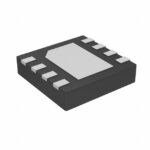 MCP2561-E/MF

The activity of extra discounts on wholesale prices is in full swing…
Please fill in your contact information and we will send you the latest wholesale price list.





