 ChipApex | Global Electronic Components Supplier
SEARCH
Search Product
Search Post
— IC芯片 | 连接器 | 传感器 | 被动器件 —
Search productSearch post
— IC芯片 | 连接器 | 传感器 | 被动器件 —
Consult the customer manager about the wholesale price.
consultation hotline:86-132-6715-2157
email:[email protected]
Contact the product manager for consultation. One-stop consultation is available.
Do you want a lower wholesale price? Please send us your inquiry and we will reply immediately.
The MCP3905AT-I/SS is a single-phase energy metering integrated circuit manufactured by Microchip Technology. It operates within a supply voltage range of 4.5 V to 5.5 V and draws a typical supply current of 2.7 mA. The device features an input impedance of 390 kΩ and maintains a measurement error of 0.1%. It utilizes a 24-SSOP package with dimensions of 5.30 mm width. The component supports I/O voltages with a high level of 2.4 V and a low level of 0.85 V. It is designed for industrial applications with an operating temperature range spanning from -40°C to 85°C.
Verify the specific suffix configuration against the official datasheet to ensure compatibility with required packaging formats, such as tape and reel or cut tape. Confirm that the automotive qualification status aligns with the intended application environment. Cross-reference the manufacturing date codes and lot numbers to ensure compliance with current RoHS and REACH directives. Validate pinout assignments against the latest revision of the product documentation before finalizing procurement orders.
Select this component for single-phase metering designs requiring high accuracy and standard interface capabilities. Consider the 24-SSOP package constraints for PCB layout and thermal management requirements. Evaluate the 0.1% measurement error specification against system-level accuracy needs. Ensure the 4.5 V to 5.5 V supply voltage range matches the available power rails in the target design architecture.
This part belongs to the MCP3905 family of energy metering ICs produced by Microchip Technology. It is functionally related to variants such as the MCP3905A-I/SS and MCP3906 series devices. The family targets the residential energy metering market, providing specialized data acquisition capabilities. Related development tools include the MCP3905EV evaluation board for system validation.
The MCP3905A-I/SS serves as a direct functional substitute within the same package type. Verify that the alternative variant meets the specific temperature grade and packaging requirements of the original design.
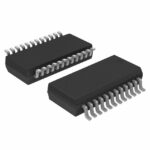 MCP3905AT-I/SS
The activity of extra discounts on wholesale prices is in full swing…
Please fill in your contact information and we will send you the latest wholesale price list.





