 ChipApex | Global Electronic Components Supplier
SEARCH
Search Product
Search Post
— IC芯片 | 连接器 | 传感器 | 被动器件 —
Search productSearch post
— IC芯片 | 连接器 | 传感器 | 被动器件 —
Consult the customer manager about the wholesale price.
consultation hotline:86-132-6715-2157
email:[email protected]
Contact the product manager for consultation. One-stop consultation is available.
Do you want a lower wholesale price? Please send us your inquiry and we will reply immediately.
The MCP3910-E/ML is a 3V two-channel Analog Front End (AFE) designed for energy metering applications. It integrates two synchronous sampling 24-bit Delta-Sigma Analog-to-Digital Converters (ADCs), two Programmable Gain Amplifiers (PGAs), and a phase delay compensation block. The device features a low-drift internal voltage reference, digital offset and gain error calibration registers, and a high-speed 20 MHz SPI-compatible serial interface. It supports resolutions from 16 to 24 bits with an Oversampling Ratio (OSR) ranging from 32 to 4096. The component operates within a supply voltage range of 2.7V to 3.6V and functions across a temperature range of -40°C to +125°C.
Verify the specific suffix against official Microchip documentation to confirm package type and temperature grade. Ensure compatibility with system isolation requirements, as the two-wire serial interface design influences isolator selection per phase. Confirm that the QFN-20 footprint matches the PCB layout specifications before finalizing procurement orders.
Select this component when dual-channel synchronous sampling is required for accurate power measurement in polyphase systems. The integrated calibration registers reduce external component count compared to discrete solutions. Consider the 20 MHz SPI speed and DMA accessibility if high throughput with an MCU is necessary. Evaluate the AEC-Q100 qualification status if automotive reliability standards are mandated for the target application environment.
This part belongs to the MCP3910 family of analog front ends from Microchip Technology. It is specifically engineered for high-precision energy metering where channel synchronization is critical. The device simplifies system design by combining ADCs, PGAs, and reference circuitry into a single package, reducing board space and complexity for utility meter manufacturers.
Publicly confirmed substitute part numbers for the MCP3910-E/ML are not available in the provided source material. Consult Microchip's official obsolescence notices or cross-reference tools for potential alternatives if this specific variant is discontinued.
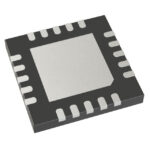 MCP3910-E/ML
The activity of extra discounts on wholesale prices is in full swing…
Please fill in your contact information and we will send you the latest wholesale price list.





