 ChipApex | Global Electronic Components Supplier

SEARCH
Search Product
Search Post
— IC芯片 | 连接器 | 传感器 | 被动器件 —
Search productSearch post
— IC芯片 | 连接器 | 传感器 | 被动器件 —
Consult the customer manager about the wholesale price.
consultation hotline:86-132-6715-2157
email:[email protected]
Contact the product manager for consultation. One-stop consultation is available.
Do you want a lower wholesale price? Please send us your inquiry and we will reply immediately.
The MCP4017T-502E/LTY is a single-channel digital potentiometer IC manufactured by Microchip Technology. It features a 5 kΩ end-to-end resistance (R_AB) with ±20% tolerance and offers 128 discrete tap positions for precise resistance adjustment. The device operates on an I²C serial interface, supporting standard (100 kHz) and fast (400 kHz) modes. It utilizes volatile RAM to store the wiper setting, which defaults to mid-scale (3Fh) upon power-up or brown-out reset. Electrical specifications include a typical wiper resistance of 100 Ω, a supply voltage range of 1.8 V to 5.5 V, and an operating temperature range from -40°C to +125°C.
Verify the specific suffix 'LTY' against the manufacturer's current datasheet to confirm package and tape/reel specifications. Ensure the design accounts for the volatile nature of the internal RAM, as the wiper position will not persist after power cycling. Confirm that the I²C bus pull-up resistors are correctly sized for the desired clock frequency within the 1.8 V to 5.5 V operating range.
Select this component when a rheostat configuration is required rather than a potentiometer. The MCP4018 variant should be considered if a three-terminal potentiometer configuration is needed instead of the two-terminal rheostat setup provided by the MCP4017. Verify that the 5 kΩ resistance value aligns with the impedance requirements of the connected circuitry to avoid excessive loading or insufficient current drive capabilities.
This part belongs to the MCP4017/18/19 family of 7-bit digital potentiometers. The MCP4017 specifically denotes the rheostat configuration, distinguishing it from the MCP4018 (potentiometer) and MCP4019 (rheostat in SC-70-5). All variants share identical electrical characteristics and I²C command sets but differ in pinout and terminal availability.
MCP4017T-502E/LT
The wiper defaults to the mid-scale position, corresponding to code 3Fh (decimal 63), upon power-on reset or brown-out reset.
No, the MCP4017 uses volatile RAM. The wiper setting is lost when power is removed and must be reprogrammed after each power cycle.
The device supports Fast Mode I²C operation up to 400 kHz, provided the supply voltage is at least 2.7 V.
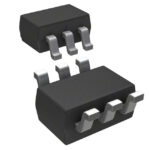 MCP4017T-502E/LTY

The activity of extra discounts on wholesale prices is in full swing…
Please fill in your contact information and we will send you the latest wholesale price list.





