 ChipApex | Global Electronic Components Supplier

SEARCH
Search Product
Search Post
— IC芯片 | 连接器 | 传感器 | 被动器件 —
Search productSearch post
— IC芯片 | 连接器 | 传感器 | 被动器件 —
Consult the customer manager about the wholesale price.
consultation hotline:86-132-6715-2157
email:[email protected]
Contact the product manager for consultation. One-stop consultation is available.
Do you want a lower wholesale price? Please send us your inquiry and we will reply immediately.
The MCP4024T-202E/OT is a nonvolatile, single-channel digital potentiometer configured as a rheostat with a nominal resistance of 2.1 kΩ. It features 6-bit resolution providing 63 resistors and 64 taps, controlled via a simple Up/Down (U/D) serial interface. The device operates within a supply voltage range of 2.7V to 5.5V and includes WiperLock™ technology for secure EEPROM storage of wiper settings without external write-protect pins. It supports high-voltage tolerant digital inputs up to 12.5V and functions across an extended temperature range from –40°C to +125°C.
Verify the specific suffix 'E' indicates the extended temperature grade (-40°C to +125°C) and '/OT' denotes the SOT-23-5 surface mount package. Confirm that the '202' code corresponds to the 2.1 kΩ resistance value. Ensure the application design accounts for the rheostat configuration where Terminal B is typically grounded or left floating depending on the specific circuit topology required.
Select this component when a nonvolatile rheostat configuration is required with minimal pin count. The U/D interface simplifies control logic compared to I2C or SPI devices. Consider the 2.1 kΩ resistance value against load requirements and ensure the 75 Ω typical wiper resistance fits the signal integrity needs. Verify that the 12.5V input tolerance matches the driving controller's output levels.
This part belongs to the MCP4021/2/3/4 family of low-cost nonvolatile digital potentiometers. The MCP4024 specifically differs from the MCP4021/23 by being factory-configured as a rheostat rather than a potentiometer. It shares the same core architecture, including WiperLock™ technology and the U/D interface, but utilizes a 5-pin SOT-23 package instead of the 6-pin variant used by other family members.
Direct replacements within the same family include the MCP4022T-202E/OT, which offers identical electrical characteristics but in a 6-pin SOT-23 package. Other variants like the MCP4021 or MCP4023 provide potentiometer configurations instead of rheostats. Cross-family replacement requires verifying interface compatibility and pinout differences.
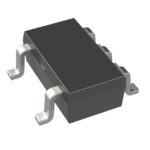 MCP4024T-202E/OT

The activity of extra discounts on wholesale prices is in full swing…
Please fill in your contact information and we will send you the latest wholesale price list.





