ChipApex | Global Electronic Components Supplier
SEARCH
Search Product
Search Post
— IC芯片 | 连接器 | 传感器 | 被动器件 —
Search productSearch post
— IC芯片 | 连接器 | 传感器 | 被动器件 —
Consult the customer manager about the wholesale price.
consultation hotline:86-132-6715-2157
email:[email protected]
Contact the product manager for consultation. One-stop consultation is available.
Do you want a lower wholesale price? Please send us your inquiry and we will reply immediately.
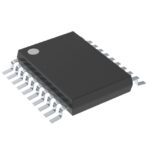
The MCP48CMB28T-20E/ST is an octal-channel, 12-bit buffered voltage output Digital-to-Analog Converter (DAC) manufactured by Microchip Technology. It features Multi-Time Programmable (MTP) nonvolatile memory and a four-wire SPI serial interface supporting speeds up to 50 MHz for write operations. The device operates within a supply voltage range of 2.7V to 5.5V for full specifications, or 1.8V to 2.7V with reduced analog performance. It provides selectable DAC voltage reference sources including device VDD, external VREF, or an internal band gap. The component is housed in a 20-lead TSSOP package and supports an extended industrial temperature range from -40°C to +125°C.
Verify the specific ordering suffix 'T' indicates tape-and-reel packaging and '-20E' denotes the 20-lead TSSOP package variant. Confirm that the 'B' in the part number corresponds to the MTP nonvolatile memory option rather than volatile RAM. Ensure the procurement documentation matches the DS20006556B datasheet revision for accurate electrical characteristics and timing requirements.
Select this component when an octal-channel configuration is required alongside nonvolatile storage for persistent DAC states. Consider the 12-bit resolution and 1 LSB INL specification for precision applications. Evaluate the SPI interface speed requirements against the 50 MHz write limit. Verify that the operating voltage range aligns with the system's power supply constraints and thermal environment.
This device belongs to the MCP48CXBX4/8 family of digital-to-analog converters. The family includes quad and octal variants with 8, 10, and 12-bit resolutions. The 'M' designation specifically identifies the nonvolatile MTP memory version, distinguishing it from the 'V' series which utilizes volatile RAM. This family shares common architectural features such as the R-2R resistor ladder and buffered voltage outputs.
Publicly confirmed substitute part numbers are not available in the provided documentation. Designers should verify compatibility with existing SPI protocols and voltage levels if considering alternative manufacturers. Check pinout and package dimensions to ensure mechanical fit without redesigning the PCB layout.
 MCP48CMB28T-20E/ST
The activity of extra discounts on wholesale prices is in full swing…
Please fill in your contact information and we will send you the latest wholesale price list.