 ChipApex | Global Electronic Components Supplier
SEARCH
Search Product
Search Post
— IC芯片 | 连接器 | 传感器 | 被动器件 —
Search productSearch post
— IC芯片 | 连接器 | 传感器 | 被动器件 —
Consult the customer manager about the wholesale price.
consultation hotline:86-132-6715-2157
email:[email protected]
Contact the product manager for consultation. One-stop consultation is available.
Do you want a lower wholesale price? Please send us your inquiry and we will reply immediately.
The MCP48CMD01-E/UN is a single-channel, 8-bit Digital-to-Analog Converter (DAC) featuring volatile memory and Multi-Time Programmable (MTP) nonvolatile storage. It operates within an analog supply voltage range of 2.7V to 5.5V for full specifications, or 1.8V to 2.7V with reduced performance metrics. The device utilizes a 4-wire SPI interface supporting write speeds up to 50 MHz and read speeds up to 25 MHz. Key electrical parameters include a typical settling time of 4 µs, a maximum Integral Nonlinearity (INL) of ±1 LSB, and a Differential Nonlinearity (DNL) of ±1 LSB. It offers selectable reference sources including VDD, external VREF, or an internal bandgap, with gain options of 1x or 2x.
Verify the specific ordering suffix against the manufacturer's current datasheet to confirm package type and temperature grade. Ensure the design supports the required high-voltage level on the LAT/HVC pin if MTP programming is utilized. Confirm that the system voltage levels are compatible with the specified operating range for the desired performance specifications.
Select this component when a single-channel buffered voltage output is required alongside nonvolatile memory for power-up state retention. Consider the 8-bit resolution and SPI interface speed requirements against the available 10-bit and 12-bit variants in the family. Evaluate the need for external versus internal reference sources based on system accuracy and power constraints.
This part belongs to the MCP48CXDX1/2 family of digital-to-analog converters manufactured by Microchip Technology. The family encompasses single and dual channel devices with resolutions ranging from 8 to 12 bits. Variants exist with either volatile RAM or nonvolatile MTP memory, all sharing a common SPI-compatible serial interface architecture.
Direct functional substitutes within the same family include MCP48CVD01-E/UN for volatile-only applications, or MCP48CMD11-E/UN and MCP48CMD21-E/UN for higher resolution requirements. Cross-family replacements require verification of pin compatibility and interface protocols.
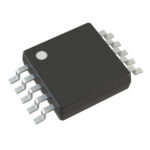 MCP48CMD01-E/UN
The activity of extra discounts on wholesale prices is in full swing…
Please fill in your contact information and we will send you the latest wholesale price list.






