ChipApex | Global Electronic Components Supplier

SEARCH
Search Product
Search Post
Search productSearch post
Consult the customer manager about the wholesale price.
consultation hotline:86-132-6715-2157
email:[email protected]
Contact the product manager for consultation. One-stop consultation is available.
Do you want a lower wholesale price? Please send us your inquiry and we will reply immediately.
MCP621T-E/SN is listed in the Instrumentation, Op Amps, Buffer Amps range at ChipApex. The manufacturer field lists Microchip Technology. Its product description is IC OPAMP GP 1 CIRCUIT 8SOIC. Review the specifications below when checking this part for your BOM.
The MCP621T-E/SN is a single-channel operational amplifier from the MCP621 family, manufactured by Microchip Technology. It features a typical gain-bandwidth product of 20 MHz and a slew rate of 30 V/µs. The device operates on a supply voltage range of +2.5V to +5.5V with a typical quiescent current of 2.5 mA per channel. It offers rail-to-rail output capability and includes an input range that extends to the negative rail. Key electrical specifications include a maximum input offset voltage of ±200 µV after calibration, a typical input bias current of 5 pA, and high output current drive of ±70 mA.
Verify the specific ordering suffix 'E/SN' corresponds to the SOIC-8 package and industrial temperature grade (-40°C to +125°C). Confirm that the datasheet DS20002188D is the authoritative source for electrical characteristics. Ensure design compatibility with the 2.5V to 5.5V supply range and check for any required external components for stability with capacitive loads.
Select this component when high bandwidth and low offset are required in a single-supply environment. The internal calibration feature reduces initial offset errors compared to non-calibrated counterparts. Consider the 2.5 mA quiescent current if power consumption is a constraint, as lower-power alternatives exist within the Microchip portfolio. Verify that the SOIC-8 package fits the PCB layout constraints.
This part belongs to the MCP621/1S/2/3/4/5/9 family of high-speed, low-offset operational amplifiers. The family includes single, dual, and quad configurations, with some variants featuring dedicated Calibration/Chip Select pins for low-power mode control. All devices in this series share similar core performance metrics but differ in channel count and package options such as SOT-23, DFN, and SOIC.
Direct substitutes within the same family include MCP621S-E/SN (different package) or multi-channel variants like MCP622-E/SN if additional channels are needed. Cross-family replacements may include MCP631 or MCP651 series, though these have different offset and current specifications.
The device uses mCal technology to self-calibrate at power-up or when the CAL/CS pin is toggled, reducing the input offset voltage to a maximum of ±200 µV under specified conditions.
The input common-mode voltage range includes the negative rail (VSS), extending up to VDD - 1.3V.
No, the MCP621 is designed to prevent phase reversal even when the input signal exceeds the common-mode range.
Explore related parts through Amplifiers, Linear, Integrated Circuits (ICs), all product categories.
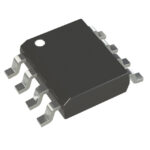 MCP621T-E/SN

The activity of extra discounts on wholesale prices is in full swing…
Please fill in your contact information and we will send you the latest wholesale price list.