ChipApex | Global Electronic Components Supplier

SEARCH
Search Product
Search Post
Search productSearch post
Consult the customer manager about the wholesale price.
consultation hotline:86-132-6715-2157
email:[email protected]
Contact the product manager for consultation. One-stop consultation is available.
Do you want a lower wholesale price? Please send us your inquiry and we will reply immediately.
MCP6273-E/SN is listed in the Instrumentation, Op Amps, Buffer Amps range at ChipApex. The manufacturer field lists Microchip Technology. Its product description is IC OPAMP GP 1 CIRCUIT 8SOIC. Review the specifications below when checking this part for your BOM.
The MCP6273-E/SN is a single-channel operational amplifier from the MCP6271/1R/2/3/4/5 family, manufactured by Microchip Technology. It features a typical gain bandwidth product of 2 MHz and a quiescent current of 170 µA. The device operates on a supply voltage ranging from 2.0V to 6.0V and supports rail-to-rail input and output swing. It includes a Chip Select (CS) pin for low-power mode control. The component is available in an 8-pin SOIC package and is rated for an extended operating temperature range from -40°C to +125°C.
Verify the specific suffix 'E/SN' corresponds to the SOIC-8 package and industrial temperature grade during procurement. Confirm the presence of the Chip Select functionality inherent to the MCP6273 model variant. Ensure compatibility with the required supply voltage range of 2.0V to 6.0V for the target application design.
Select this component for designs requiring a single op amp with integrated power management via the Chip Select pin. It is suitable for general-purpose amplification where low power consumption and wide bandwidth are prioritized. Consider the SOIC-8 package constraints and ensure the application benefits from the rail-to-rail input/output capabilities within the specified temperature range.
This part belongs to the MCP627x family of 170 µA, 2 MHz Rail-to-Rail Operational Amplifiers. The family includes single, dual, and quad configurations. The MCP6273 specifically denotes the single-channel variant equipped with the Chip Select feature, distinguishing it from the standard MCP6271 which lacks this control pin.
MCP6271T-E/SN
Explore related parts through Amplifiers, Linear, Integrated Circuits (ICs), all product categories.
Microchip Technology MCP6273-E-SN is usually screened in Instrumentation, Op Amps, Buffer Amps category when gain, offset, and noise margins must hold across temperature, loading, and production variance on the assembled chain. Key specs include Description (IC OPAMP GP 1 CIRCUIT 8SOIC), Output type (Rail-to-Rail), Temperature (-40°C ~ 125°C), Package/case (8-SOIC (0.154", 3.90mm Width)), and Mounting (Surface Mount). The strongest approval record usually starts with bandwidth (2 MHz) and channels (1) and then checks whether those limits still hold after assembly.
How do I validate MCP6273-E-SN in my design?
Verify stability under your expected capacitive load, confirm the common-mode voltage range, and check output swing limits.
Which Amplifier Type is specified for MCP6273-E-SN?
General Purpose
Which supply current is specified for MCP6273-E-SN?
170µA
Can you confirm the Voltage - Supply Span (Min) for MCP6273-E-SN?
2 V
A practical check for Microchip Technology MCP6273-E-SN in Instrumentation, Op Amps, Buffer Amps is whether the electrical, thermal, interface, and service assumptions still hold once the part is on the released assembly. In production, the early application review usually stays on bandwidth (2 MHz), output type (Rail-to-Rail), and channels (1). In practice, precision signal-chain parts are usually qualified around reference quality, source behavior, filtering, and measurement repeatability because bench accuracy often collapses when board-level assumptions are added. On the assembled PCB, performance is set by the whole chain together: references, filtering, layout coupling, and the real source/load impedance in the system. Real performance is determined by the full chain, including reference quality, filtering, layout coupling, and source/load impedance. In harsh environments, in-amps help reject ground shifts and common-mode noise introduced by motors, contactors, and cable routing.
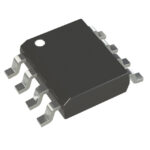 MCP6273-E/SN

The activity of extra discounts on wholesale prices is in full swing…
Please fill in your contact information and we will send you the latest wholesale price list.